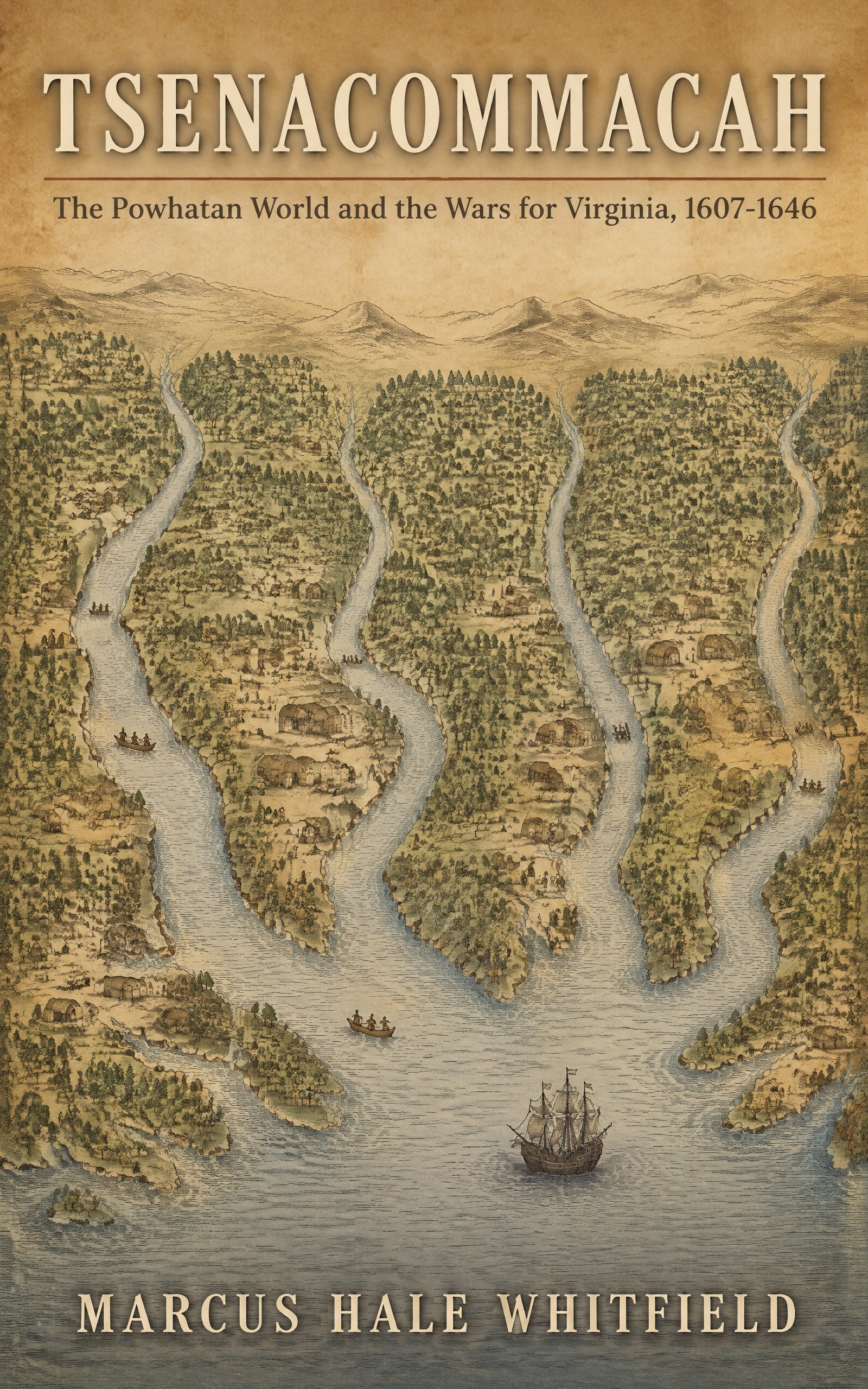
Tsenacommacah: The Powhatan World and the Wars for Virginia, 1607-1646
by Marcus Hale Whitfield
Weyanoke, Appamattuck, Kecoughtan, Paspahegh, Piankatank, Rappahannock: from towns all over the lower Chesapeake, emissaries came to Werowocomoco on the York River to settle boundaries and blood debts, arrange marriages, bring tribute and ask for corn. In the longhouse sat Wahunsenacawh, the paramount chief the English would call Powhatan, who had spent fifty years building Tsenacommacah out of marriages, obligations, threats and corn. Tribute came to him as deerskins, copper and pearls and went back down the rivers as gifts and food in lean years, because a chief's power lay in what he could give away.
In May 1607 three English ships came up the river they would name the James. The four decades that followed are told here from the Powhatan side: the island in the marshes where the colonists built their fort, Wahunsenacawh's daughter Matoaka, whom the colonists called Pocahontas, and the 1614 marriage that bought eight years of peace, the tobacco fields that swallowed the land, and the morning of March 22, 1622, when the Powhatan towns struck the settlements all along the river.
A war with no truce followed, and with it Opechancanough, Wahunsenacawh's brother, the chief who would not kneel, who led a second great assault in 1644 and died a prisoner at Jamestown two years later. It closes with the survivors and the Virginia they were left to live in.
The English never quite saw that a chief was measured by what he gave away. For forty years the misunderstanding was paid for in corn, land and lives.