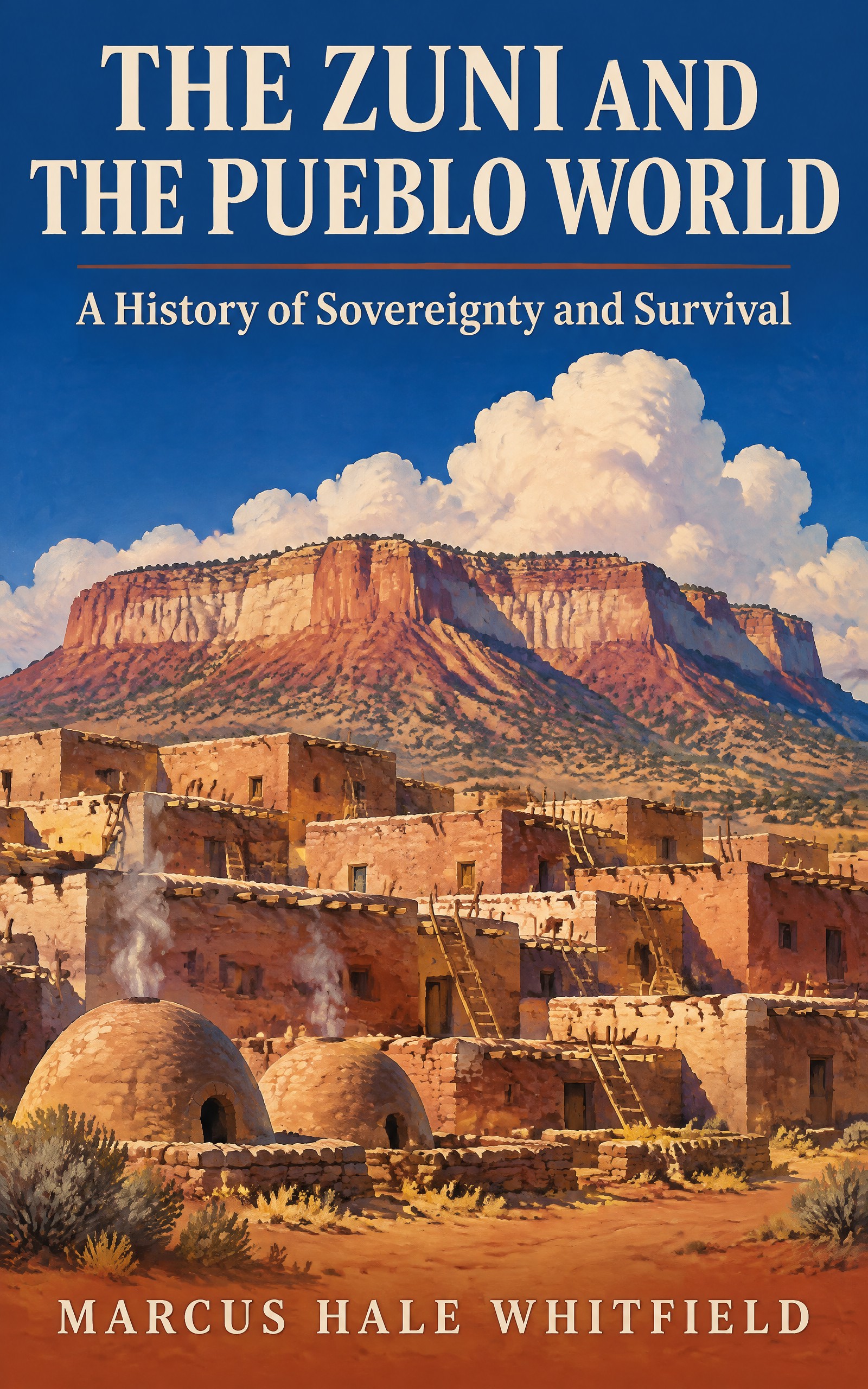
The Zuni and the Pueblo World: A History of Sovereignty and Survival
by Marcus Hale Whitfield
The rumor had a name: Cíbola. A barefoot friar named Marcos de Niza had seen it from a distant hill in 1539, after his guide Esteban was killed there, and came back to Mexico talking of seven cities with turquoise doorways and people who worked gold. The viceroy believed him. So did Francisco Vázquez de Coronado, who staked everything he owned on it. In February 1540 he marched north from Compostela with some three hundred forty Spanish soldiers and about thirteen hundred Native allies from Tlaxcala, Michoacán and beyond, whose names nobody in the column ever wrote down.
What the Spaniards found in July 1540 was Hawikuh, one of six Zuni towns in a high valley of dry rivers and juniper: adobe houses stacked up to four stories high and entered by ladders from the roofs, cornfields below, and not a speck of gold. Its people called themselves A:shiwi.
From that first meeting the book reaches back to the corn and kachina world and the drought that emptied the ancestral cities. Then it moves forward: the missions and their whipping post, Po'pay's revolt of 1680, which drove Spain out of New Mexico for twelve years, Frank Hamilton Cushing's years at Zuni, the railroad and the boarding schools, the war years and the Red Power era, and Halona Idiwan'a today.
Coronado went home two years later with nothing to show for Cíbola. The A:shiwi never left.