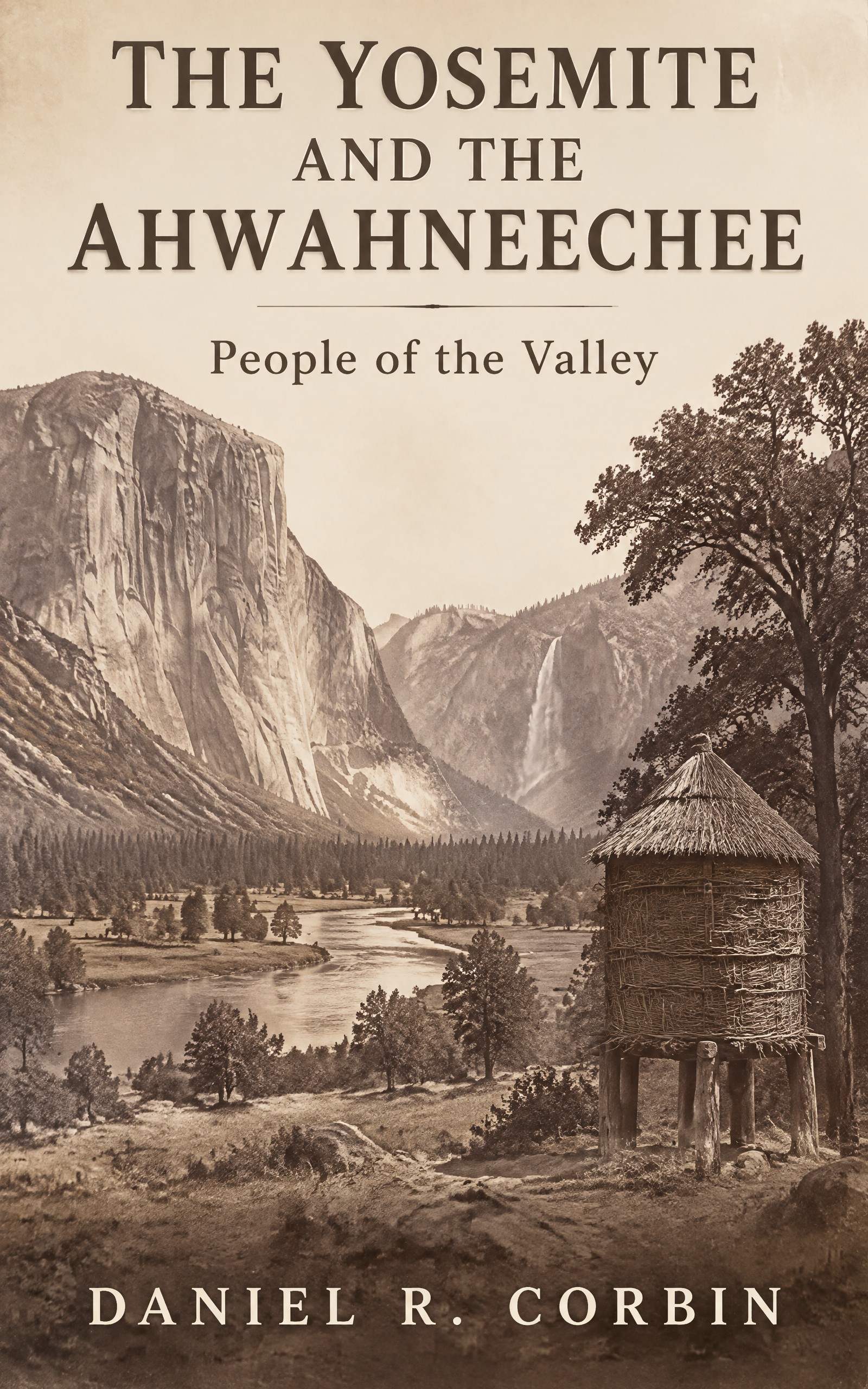
The Yosemite and the Ahwahneechee: People of the Valley
by Daniel R. Corbin
Her name does not survive. What survives is a bedrock mortar worn three inches deep into the granite of Yosemite Valley by generations of women grinding acorns, the same work she was doing at first light, brushing black oak mast into a coiled basket the way her mother and grandmother had. To the people who lived here the valley was, first of all, a larder, and a tended one, its oak groves burned over in the fall to keep them open and bearing.
They called it Ahwahnee, the gaping mouth, and the band that lived there is known as the Ahwahneechee, kin by marriage and trade to the Miwok peoples to the north and the Yokuts of the great interior plain. In 1851 the gold rush brought the Mariposa Battalion into the valley after them, burning villages and food stores. After the battalion came a treaty made on the San Joaquin that the Senate never ratified, Tenaya's return, the war of 1852 on the acorns, and the years after Tenaya.
In 1864 Abraham Lincoln signed the Yosemite Grant, setting the valley aside "for public use, resort, and recreation." The people who had tended it for a thousand years were not in the sentence. The last chapters carry them through the tourist era, in a park that came to see them as squatters, to the Southern Sierra Miwok families who say the valley is still theirs.