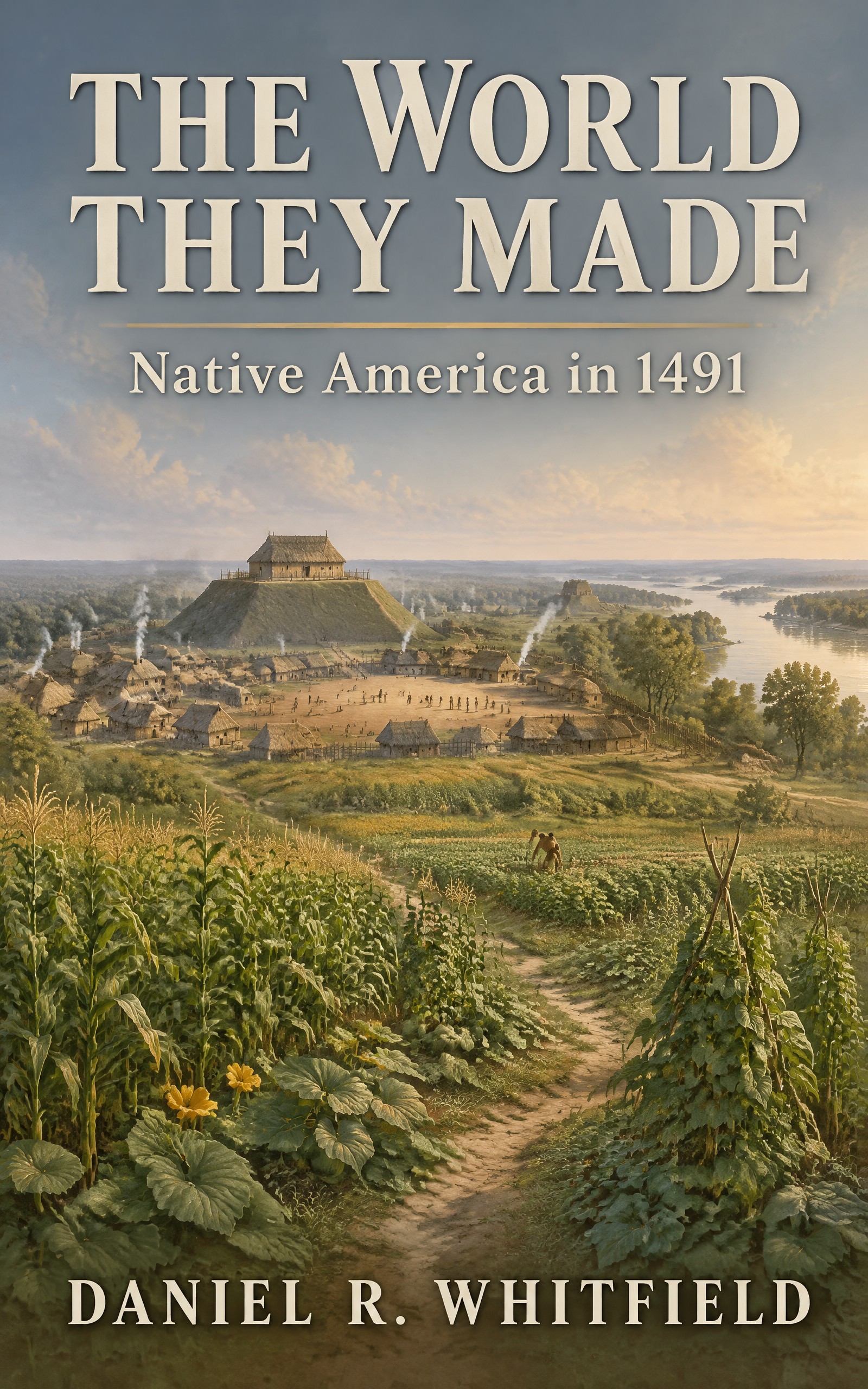
The World They Made: Native America in 1491
by Daniel R. Whitfield
A woman with a child on her hip walked south along the shore of a shallow lake, in mud that took her footprints the way wax takes a seal. A giant ground sloth had passed that way not long before, and she stepped around its track without breaking stride. Then the water rose, the mud closed over the prints, and the dunes of White Sands in New Mexico walked across them. When seeds from the same layers were dated in 2021, they came back at roughly 23,000 to 21,000 years old, thousands of years before Clovis, the culture once confidently called the first Americans.
Those footprints raise the questions this history is built around. How long have people lived in North America? How did they feed and govern themselves? How many of them were there by the time Columbus sailed, and what happened to them after he came? The answers run through the ridges of Poverty Point, Cahokia around 1050, the Hohokam canals and the great houses of Chaco, the cedar and salmon of the Northwest Coast, a league of peace, and the Three Sisters of corn, beans and squash.
The last chapters reckon with numbers: the long argument over how many people lived here in 1491, and the Great Dying that followed the ships. They close on the world those people made. At White Sands the wind still shifts the sand, and every year it uncovers a few more footprints.