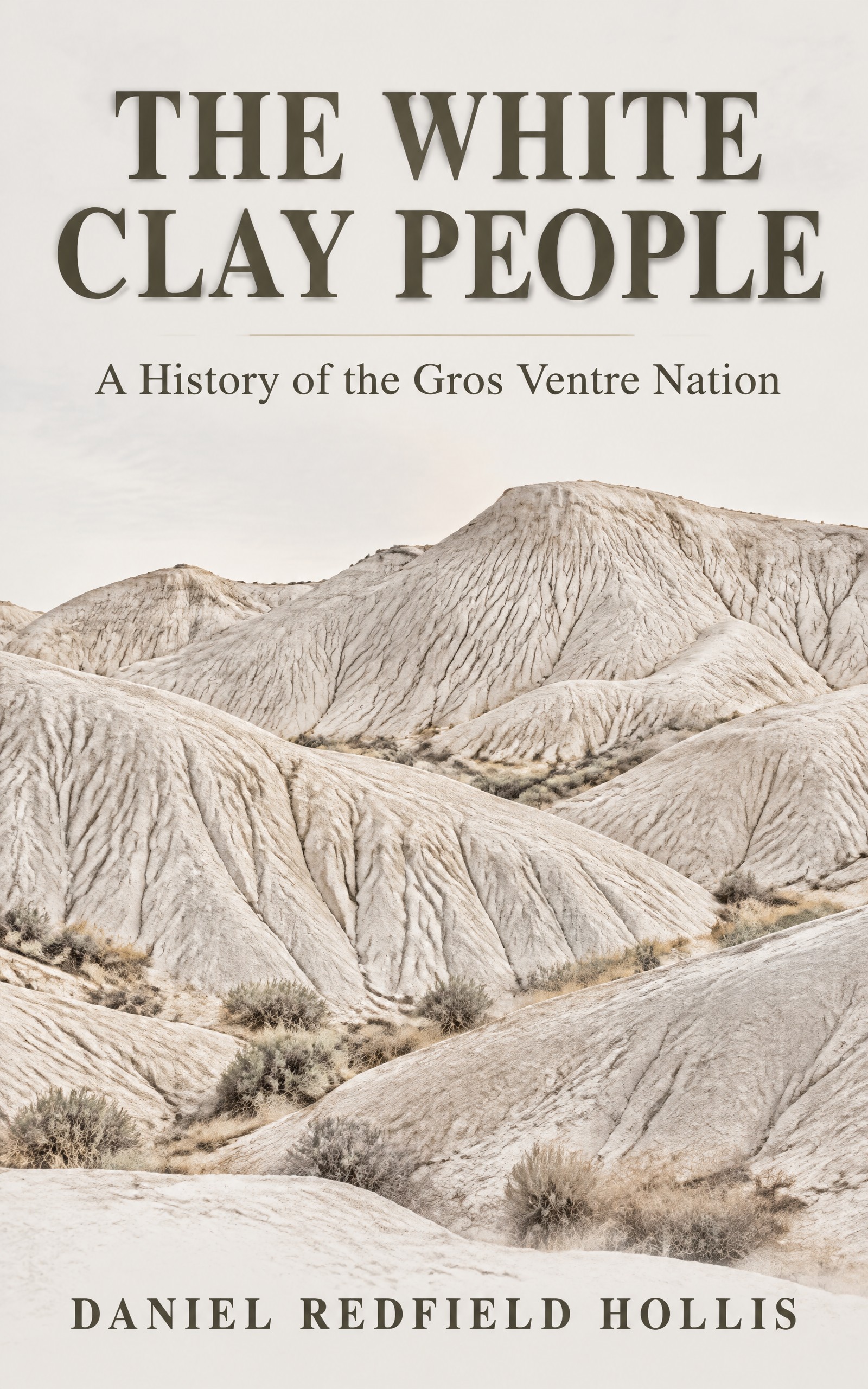
The White Clay People: A History of the Gros Ventre Nation
by Daniel Redfield Hollis
Two nations, two languages, one wrong name. Eighteenth-century traders heard the Cree and Assiniboine call a people of the northern plains by a word they took to mean "big bellies," and the French wrote it down as Gros Ventre. The same label was pinned on the Hidatsa of the upper Missouri, a separate nation speaking an unrelated language. The people themselves have always had their own name: A'aninin, the White Clay People.
The name comes from the clay itself, dug from particular grounds and painted onto faces and bodies at ceremonies of grief, healing and naming. The old men said the people were made from that earth. Their stories place them far to the northeast, generations back, before they fought and traded their way west onto the buffalo plains and parted from the relatives who became the Arapaho. Iron knives and horses reached their country ahead of the traders, and so did the first epidemics.
Here are the buffalo road and the horse, the alliance with the Blackfeet Confederacy, the traders on the river and the treaty council at Judith River in 1855, then the famine years and the reservation at Fort Belknap in Montana, which the A'aninin share with the Assiniboine. It carries on through the twentieth century and the Red Power years to the nation of today.
The traders' name has lasted more than two hundred years on paper. The white clay is older.