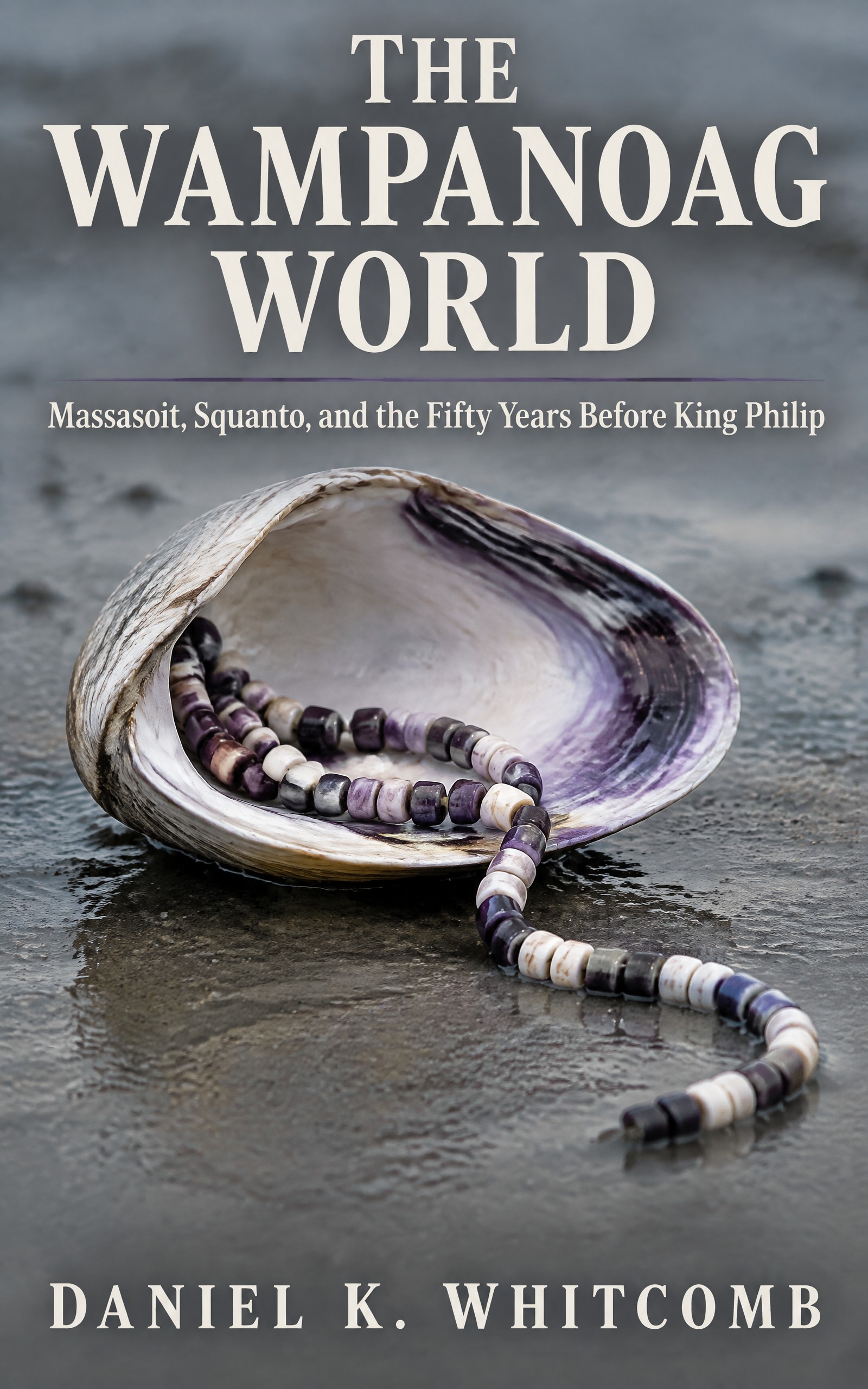
The Wampanoag World: Massasoit, Squanto, and the Fifty Years Before King Philip
by Daniel K. Whitcomb
In 1614 an English captain named Thomas Hunt lured twenty-seven Wampanoag and Nauset men aboard his ship, sailed them to Spain and sold them at Málaga. One of them, a Patuxet man named Tisquantum, spent years working his way home by way of London. When he finally reached his own coast again, piloting an English ship, he found harbors with no smoke and no canoes, cornfields gone to weed and houses fallen in at the ridgepole. The sickness that swept the coast from 1616 to 1619 had killed as many as nine in ten people in some towns. His own town, Patuxet, was empty.
The Wampanoag, the People of the First Light, had lived in some sixty towns from Narragansett Bay to Cape Cod and the islands. Their great sachem, Ousamequin, known to the English as Massasoit, now led a people cut down by the plague, and in March 1621 he walked into the newcomers' half-built settlement at Patuxet and made a treaty with them. Tisquantum, remembered as Squanto, stood between the two sides and translated.
The book follows the half century that treaty opened: the harvest and the hungry years, the wampum trade, the lesson the Wampanoag drew from the Pequot War, the praying towns, the deed book that recorded their land passing into English hands, and the death of Massasoit.
In time the peace passed to his son Metacom, whom the English called King Philip, along with everything it had cost.