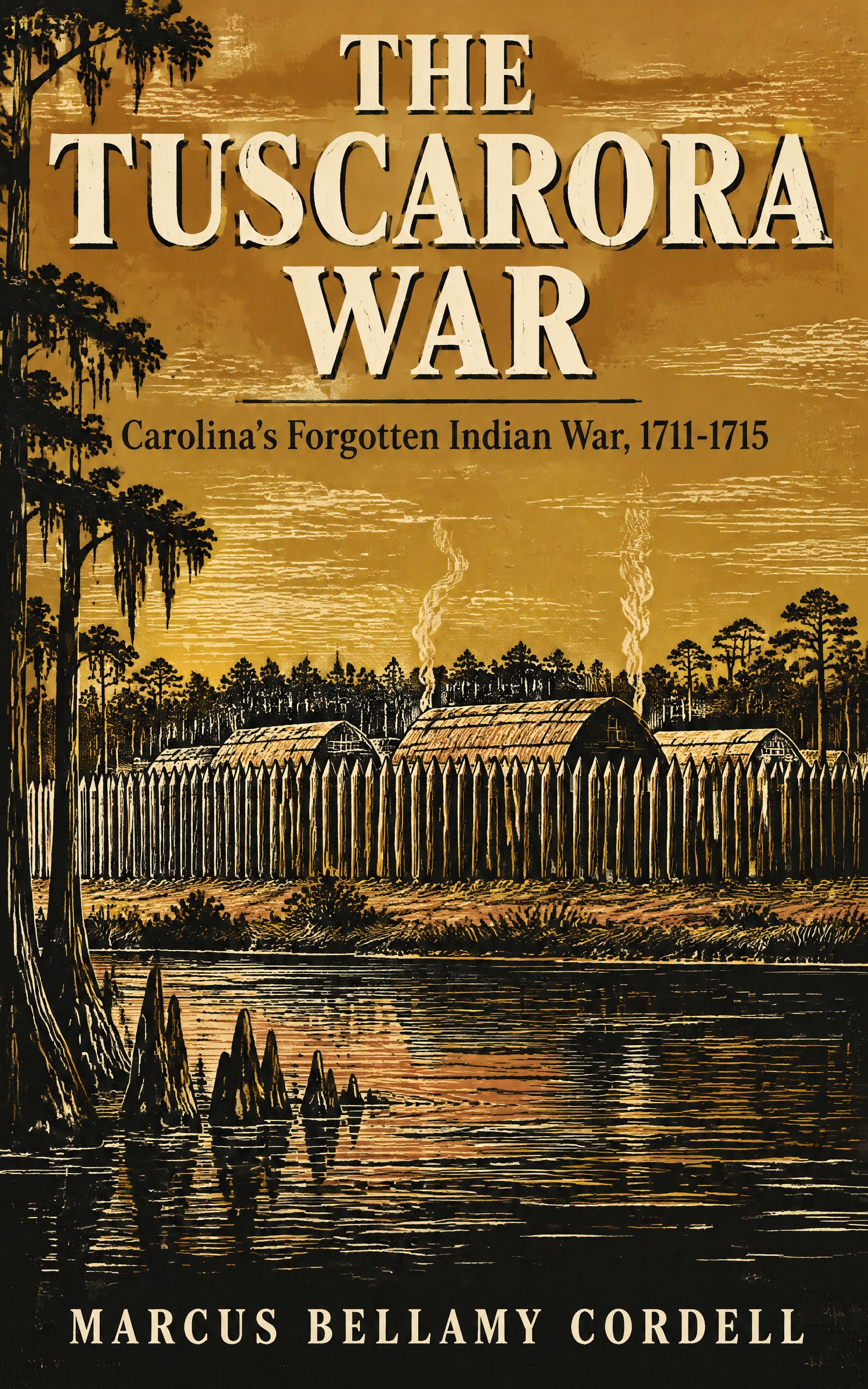
The Tuscarora War: Carolina's Forgotten Indian War, 1711-1715
by Marcus Bellamy Cordell
The Tuscarora called themselves Skarù:ręˀ, a word that means something like "hemp gatherers." In the first years of the 1700s their palisaded towns stood on the rises along the Neuse, above floodplain soil so rich the corn grew until it fell over from its own weight, and their language set them apart from every neighbor. It was Iroquoian, a cousin of the tongues spoken hundreds of miles north in the longhouses of the Seneca, Cayuga, Onondaga, Oneida and Mohawk.
Carolina pressed in on them from two sides: traders who bought Native captives for the slave markets, and a new wave of settlers along the rivers. On September 22, 1711, Tuscarora warriors struck the settlements on the Neuse and the Pamlico, and before the raids were over more than a hundred colonists were dead. Carolina answered with armies raised largely from other Native nations, and in 1713 Colonel James Moore's force stormed a fortified Tuscarora town. Hundreds of its people were killed, and hundreds more were carried off to be sold.
After the war came the long walk north. The Haudenosaunee took the Tuscarora in as the Sixth Nation of their confederacy, while the towns that stayed behind in Carolina made what terms they could.
Their ancestors and the Five Nations had parted so long ago that no one alive could say why. When the worst came, it was that old northern door the Tuscarora knocked on.