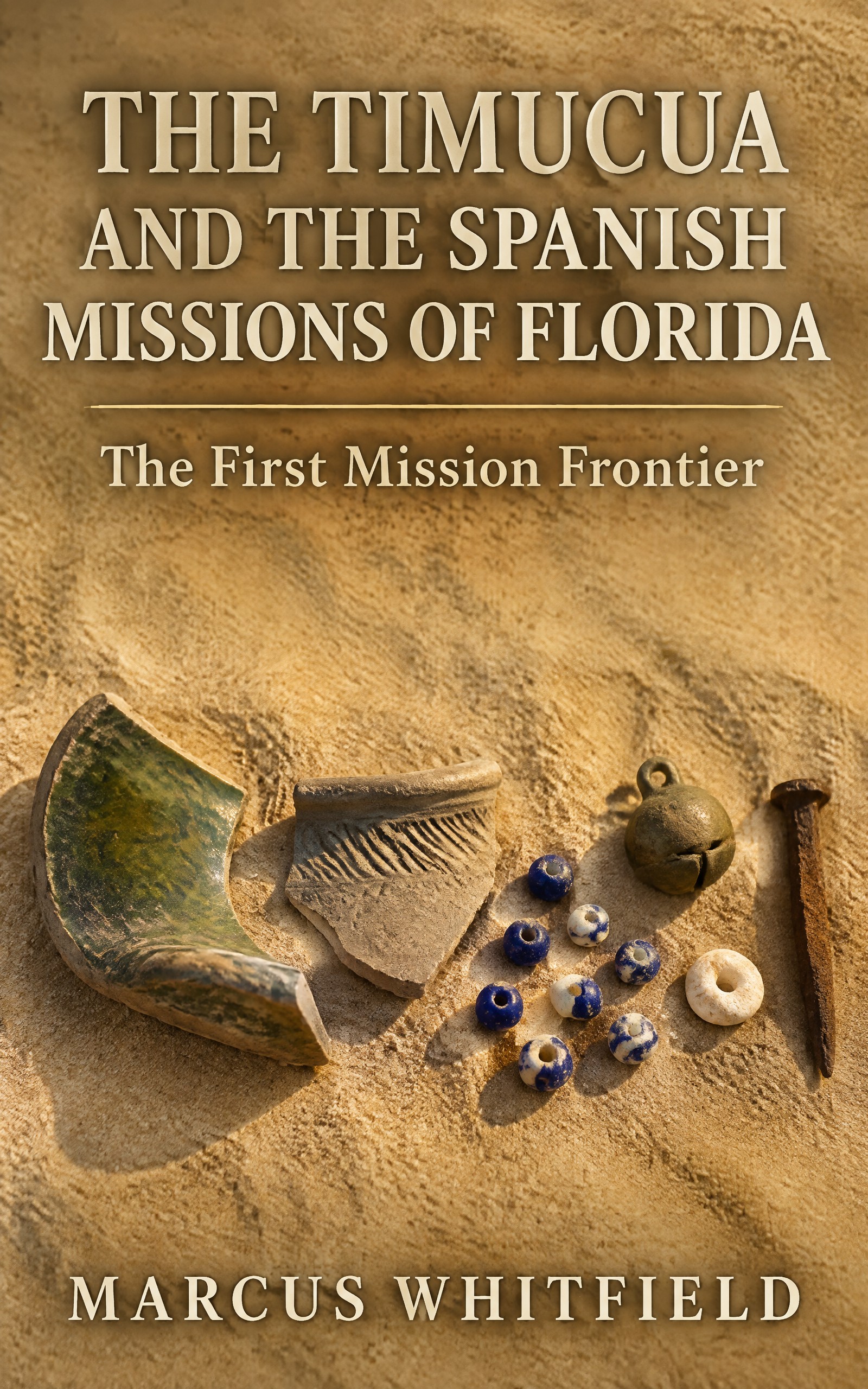
The Timucua and the Spanish Missions of Florida: The First Mission Frontier
by Marcus Whitfield
The people of Seloy watched the sails for two days and sent no canoe to meet them. They waited. On September 8, 1565, Pedro Menéndez de Avilés came ashore anyway, banner raised, with orders from Philip II to drive the French from this coast and plant a Spanish town. His soldiers were hungry. The Timucua town had corn, dried mullet and a round council house of timber and palmetto thatch big enough to hold several hundred people, and Menéndez moved his men into it.
That was the founding of St. Augustine. From it the Franciscans carried the cross into the Timucua towns of the coast and the pine flatwoods inland, north to the Guale on the Georgia coast and west to the Apalachee. What came with them fills a century and a half: epidemic fevers, the Guale revolt, the long peace in Apalachee, the Timucua uprising of 1656, and at last the raids from Carolina, when English slavers and their Native allies burned the Apalachee missions and scattered the survivors. The account follows the retreat that came after, the last friars, and what the missions left behind.
The friars later wrote that the chief of Seloy gave the Spaniards his council house out of generosity. They did not write down what his people thought of a foreign war captain sleeping where their council fire had burned for generations.