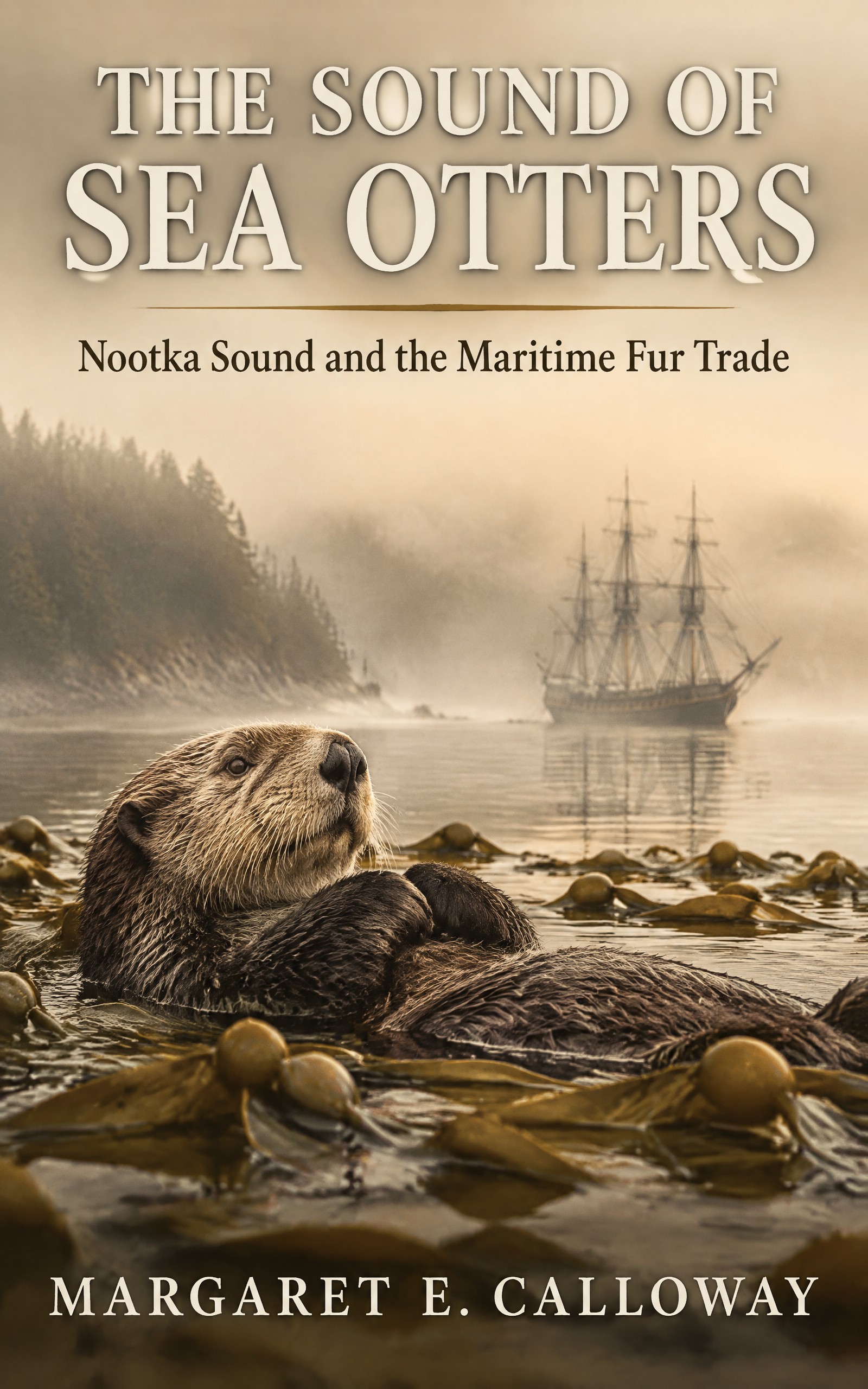
The Sound of Sea Otters: Nootka Sound and the Maritime Fur Trade
by Margaret E. Calloway
Six canoes leave Yuquot at a dawn the color of cold iron. In the bow of the first kneels a harpooner who has fasted, bathed in cold water and scrubbed his skin raw with hemlock, because the right to that place in the canoe came with his family's name and a whale is never taken lightly. His weapon is a yew shaft as long as two tall men, tipped with ground mussel shell. Behind him ride the sealskin floats that will drag at a gray whale until it tires.
This was the Nuu-chah-nulth coast, the west side of what is now Vancouver Island, where the Mowachaht, Ahousaht, Hesquiaht, Tla-o-qui-aht and their neighbors each held their own chiefs, territories and rights to fishing and whaling grounds. In 1778 Captain James Cook's ships anchored in Nootka Sound, and the sea otter pelts his crews traded for later sold in Canton for sums that sent other captains racing back.
They came to bargain with Maquinna, the Mowachaht chief at Yuquot, and a decade after Cook his harbor brought Spain and Britain to the edge of war in the Nootka Crisis of 1789-1790. The narrative runs from that crisis through the conventions and the Spanish withdrawal to 1803, when Maquinna's people seized the American trading ship Boston, killed all but two of her crew, and held her armorer, John Jewitt, captive for more than two years. It ends with the long struggle for land, and with Yuquot today.
Cook's men had come for furs. They found a coast where every beach, channel and whaling ground already belonged to someone.