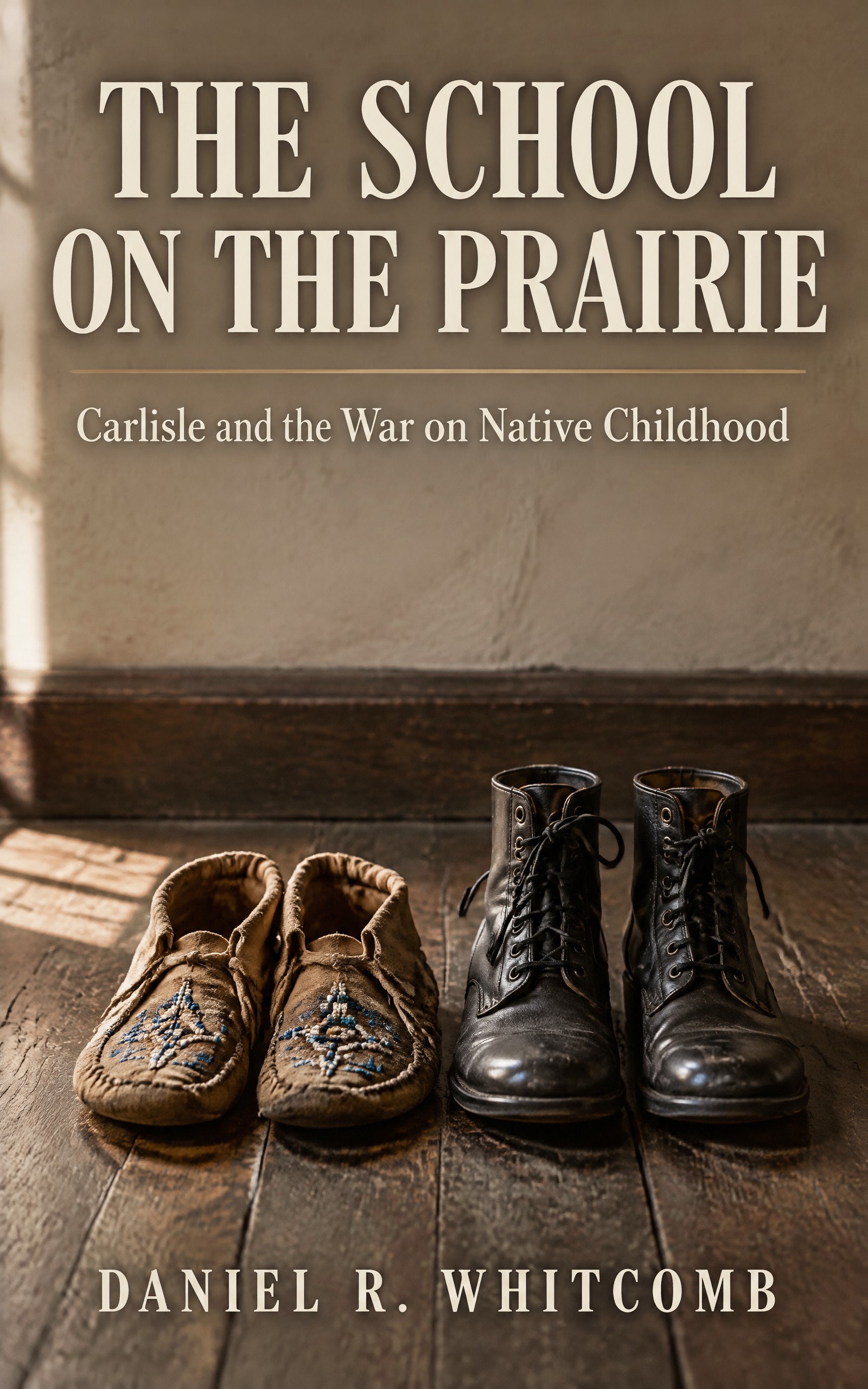
The School on the Prairie: Carlisle and the War on Native Childhood
by Daniel R. Whitcomb
The girl counted telegraph poles because there was nothing else to count. For two days the train had carried her east, past Chicago and into the small, fenced, rain-green farm country of Pennsylvania. The only name she had left was the one a stranger had written in a book in a tent on the Rosebud, sounding out her father's name and flattening it to fit on a line.
She was one of eighty-two Lakota children who left the Dakota agencies in the fall of 1879 for a new school at Carlisle. At the head of the train rode Richard Henry Pratt, a career cavalry officer who called them his children and believed every mile east was a mile out of the dark. Commanding Black troopers had taught him that a dark-skinned man could do anything a white man could, given the same chance. Three years guarding Cheyenne, Kiowa, Comanche and Arapaho prisoners at Fort Marion had convinced him he had found a method. Now he would try it on children, far from home, with their hair cut and their languages forbidden.
Carlisle became the model for a whole system of boarding schools, and the chapters follow both the model and its cracks: the nations that refused to give up their children, a Quaker experiment, a teacher's ledger, and the "outing" system that put students to work for farm families. They find the children's own voices in unlikely places, and they follow some of them home.
Pratt insisted to every reporter who asked that he was rescuing them, and believed it to the end. None of his answers had room for what the girl at the window was counting.