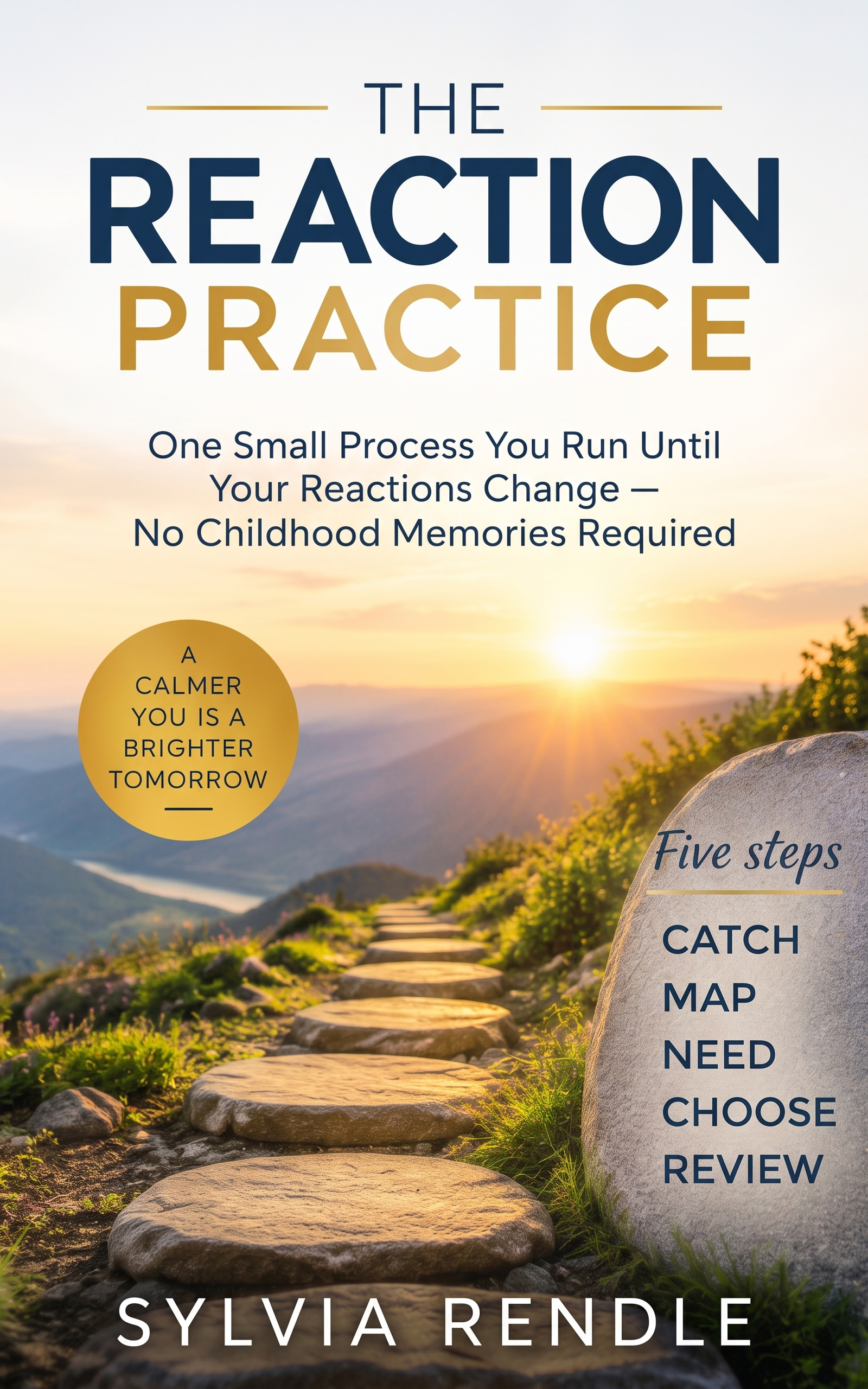
The Reaction Practice
One Small Process You Run Until Your Reactions Change — No Childhood Memories Required
by Sylvia Rendle
You already understand your patterns. You can explain exactly why you go quiet, or say yes when you meant no, or replay a comment for three days.
And you still do it.
That gap — between understanding a reaction and having a different one available — is what this book is for. Not more insight. Practice.
THE REACTION PRACTICE teaches one short process, five steps, that you run whenever a reaction is bigger than the moment that caused it:
CATCH — notice it, and check you can work with it
MAP — thought, feeling, body, urge
NEED — what the reaction was protecting, or asking for
CHOOSE — one different response, for the situation actually in front of you
REVIEW — what happened when you tried it
You learn it once. Then you run it again, on harder material, and again after that — through small irritations, criticism, being left out, people-pleasing, comparison, conflict with people close to you, the reactions you would rather not admit to, and the quiet business of pulling away from things you cared about.
Forty-one worked runs. The same five steps every time.
No childhood memories required. Most approaches begin with picturing yourself at seven — and if your childhood is patchy, blank, or simply unavailable, that is where the book closes. This one runs entirely on what is happening in your life now.
You come back and compare. Every run ends with what actually happened when you tried something different.
It tells you when to stop. There is a full chapter on what to do when a reaction is too big to work with today, and it treats stopping as the practice working rather than failing.
It is not therapy, and it does not pretend to be. It contains no memory-recovery prompts, no visualisations, no letters to your younger self.
You already have a pen.