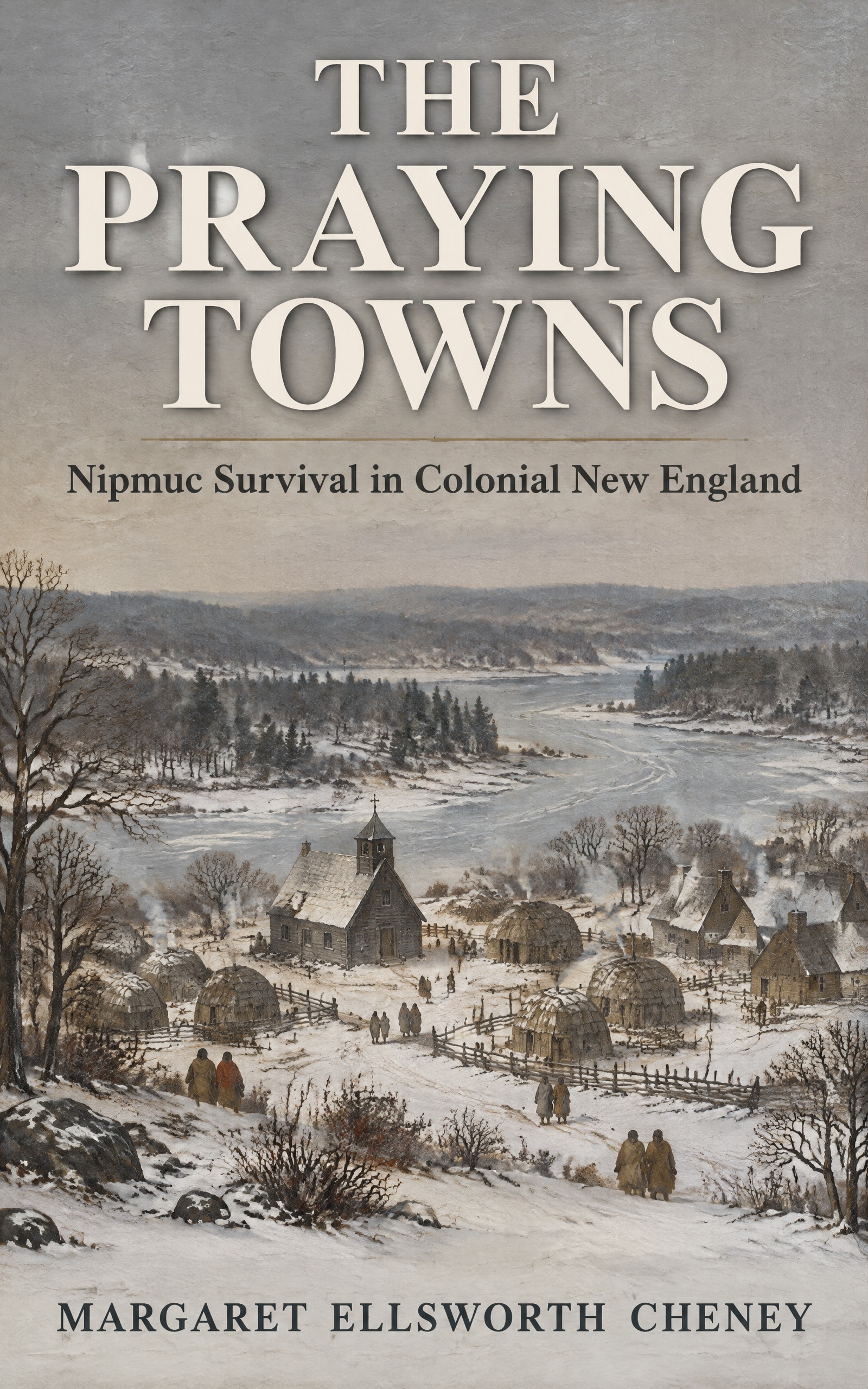
The Praying Towns: Nipmuc Survival in Colonial New England
by Margaret Ellsworth Cheney
What startled the people gathered at Nonantum on October 28, 1646, was not the sermon. It was that the Englishman giving it had bothered to learn their language. John Eliot spoke to Waban's people in Massachusett, heavily accented and stopping now and then to be corrected, about one God who made all things. His listeners kept their own counsel. They had heard English promises before, and a sickness had already emptied their villages once.
Out of that morning grew fourteen praying towns by the early 1670s, and a Bible that Eliot and his Native collaborators printed in Massachusett in 1663, the first complete Bible printed anywhere in the Americas. Deeds and fences came with them, then the death of John Sassamon and King Philip's War. Nipmuc men who would not pray fought the English; Christian Indians, trusted by neither side, were shipped to Deer Island in Boston Harbor, where many died that winter. Many of the survivors went home to Natick and spent the next century defending what land they had left, and today the language of Eliot's Bible is being spoken again. In Grafton, a few acres of old Hassanamesit remain Nipmuc land.