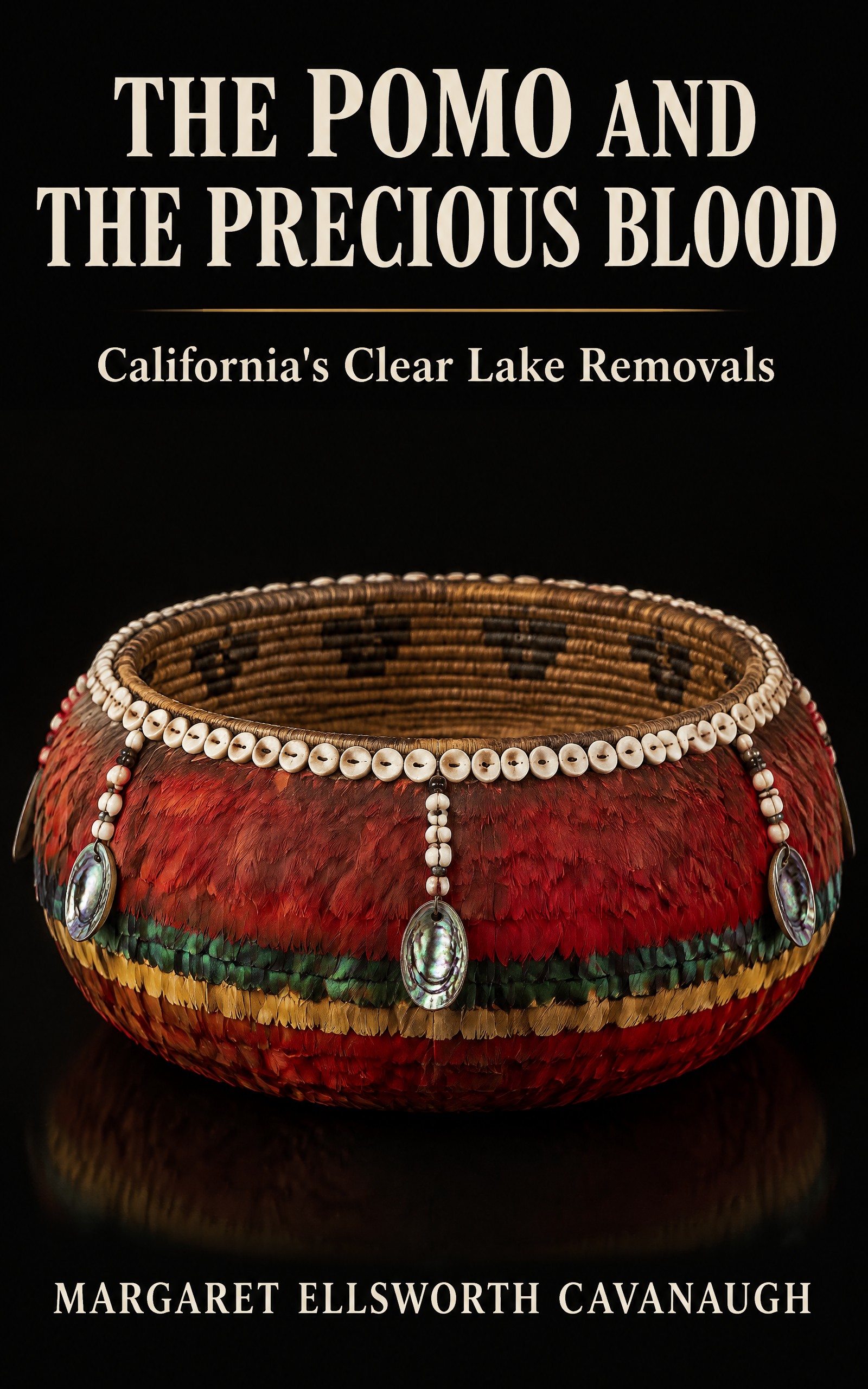
The Pomo and the Precious Blood: California's Clear Lake Removals
by Margaret Ellsworth Cavanaugh
Since May 15, 1850, the island at the north end of Clear Lake has been called Bloody Island. On that day U.S. Army troops under Nathaniel Lyon attacked the Pomo families sheltering there. Most of the dead were women, children and old people, and estimates run from dozens to several hundred. It was the Army's answer to the killing, the winter before, of two ranchers who had held Pomo men and women in near-slavery.
The world the soldiers broke into had fed several thousand Pomo people for centuries. Bread began in the fall with a long pole and a burden basket: acorns beaten down from the black oaks, carried home by tumpline, cracked one at a time between two stones, pounded in bedrock mortars worn two feet deep and leached with hot water until it ran clear. The lake gave fish, waterfowl and the tule that built houses, boats and baskets.
The story reaches back to Russian and Spanish contact on the coast and runs forward through removal over the mountains to Round Valley, the state law that let settlers indenture Native children, the removals of the 1870s, allotment, termination and the Land Back movement. Through all of it Pomo women wove baskets to keep their families fed, and museums around the world bought them as art.