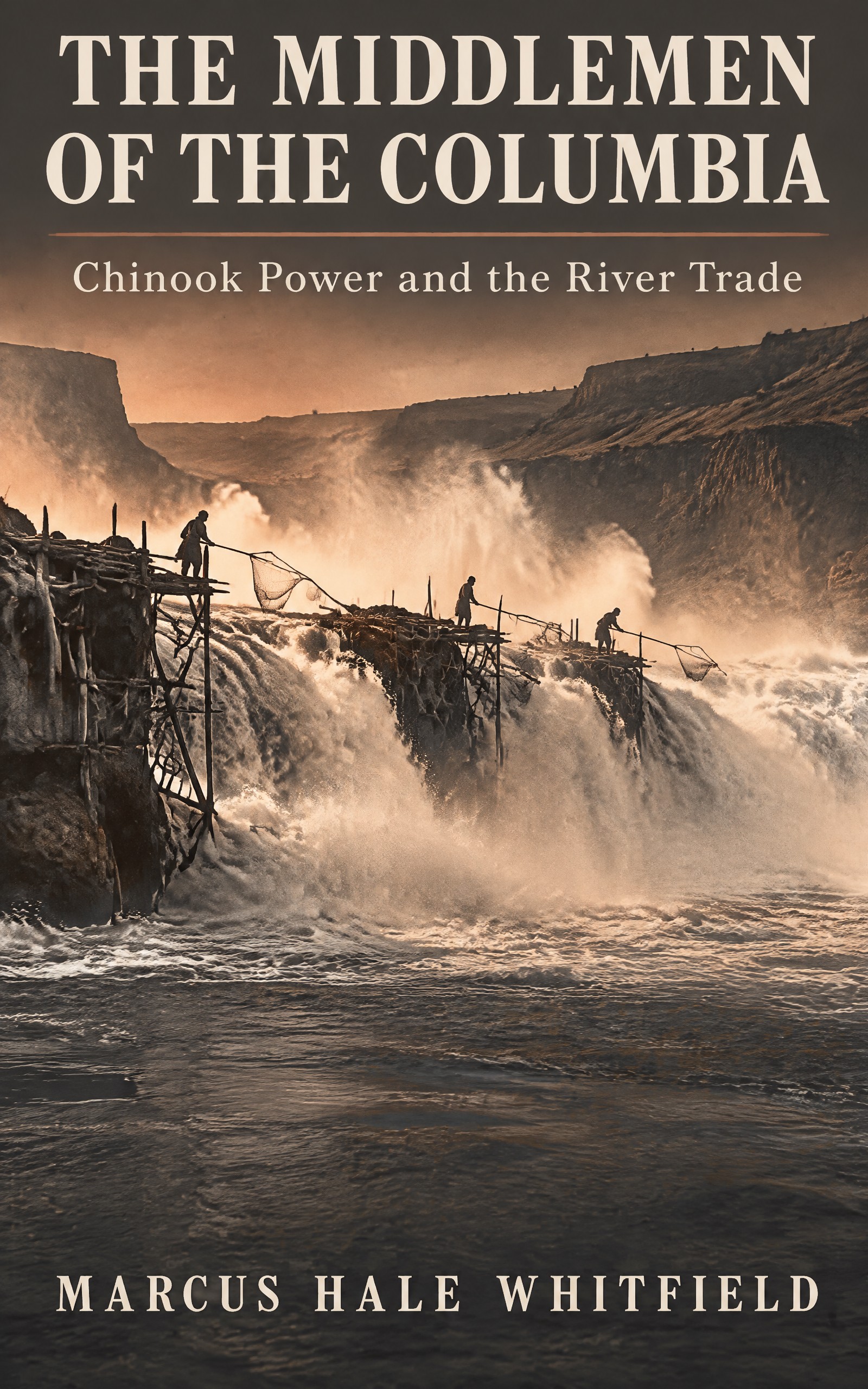
The Middlemen of the Columbia: Chinook Power and the River Trade
by Marcus Hale Whitfield
For centuries, nothing went up or down the lower Columbia without passing the Chinook. Dentalium shell from the coast, obsidian from the Cascades, dried salmon, camas and captives, and later the sea otter pelts that Boston ships carried off to China all moved through the plank-house towns between the river's mouth and the falls at Celilo, and the Chinookan peoples who held that reach of river took their share of every exchange. Theirs was a crowded, ordered country, where families owned the right to fish a particular eddy or to sing the song that brought the salmon upriver, and women waded the tideflats at low water for wapato.
Robert Gray sailed in and named the river for his ship in 1792. Lewis and Clark wintered at its mouth in 1805, and Astor's traders built a post there in 1811; one of them married a daughter of the Chinook leader Comcomly. The Hudson's Bay Company made Fort Vancouver the capital of the river trade, and a fever in the early 1830s emptied whole towns. At Tansy Point in 1851, Chinookan leaders signed treaties ceding most of their land in return for small reservations, and the Senate never ratified them. Their descendants spent the next hundred and fifty years pressing the United States to honor what its agents had promised. Federal recognition finally came in 2001. It was withdrawn the following year.