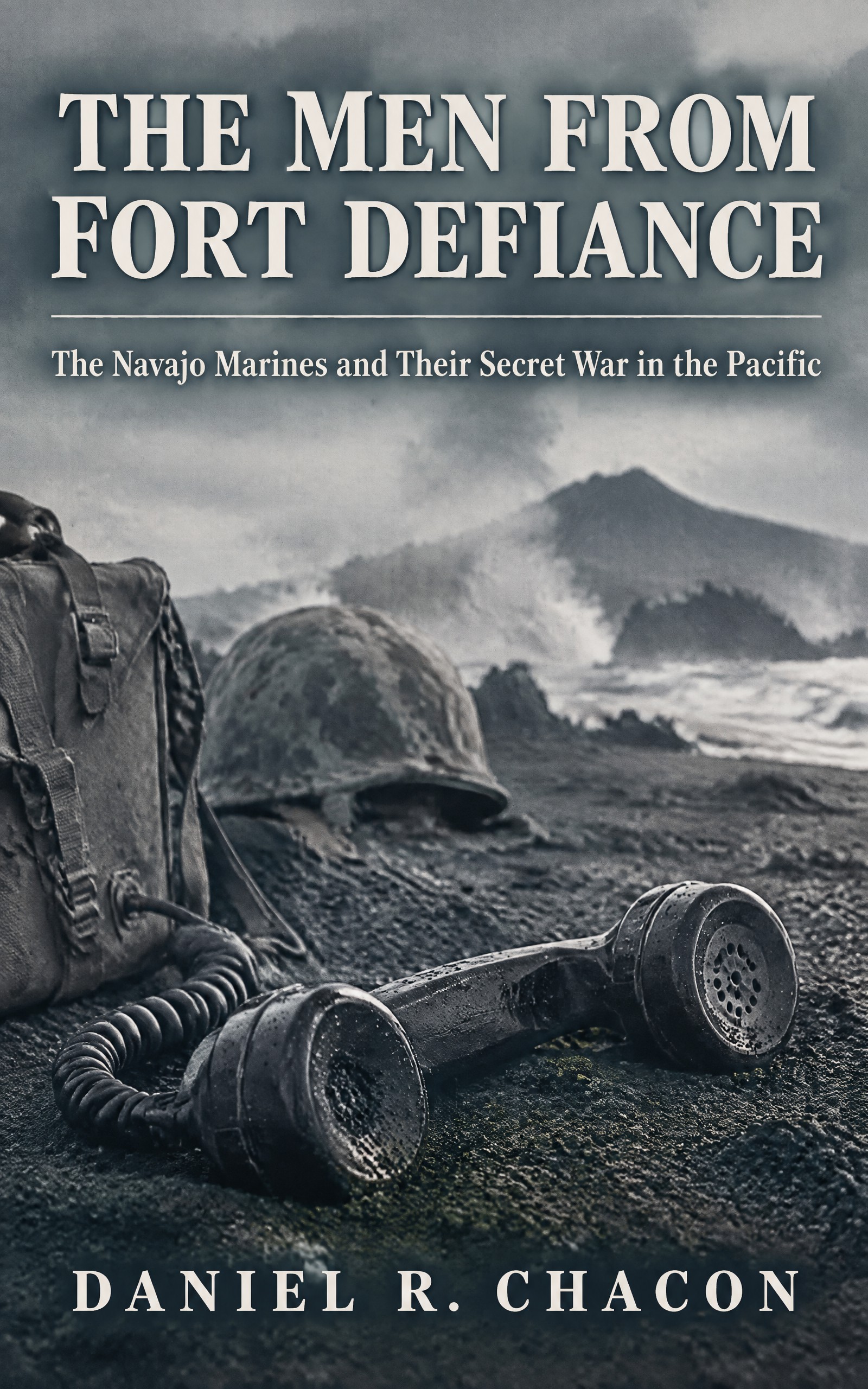
The Men from Fort Defiance: The Navajo Marines and Their Secret War in the Pacific
by Daniel R. Chacon
Before dawn in a hogan below the Chuska Mountains, a grandmother tells a small boy what he has heard since before he could talk: that the Diné came up out of the world below and walked to this country between four sacred mountains, where they were meant to be. The story has no date. It lives in the language, a language of ceremony and medicine in which one word can be a direction and a prayer at once, and which government boarding schools would punish Diné children for speaking.
In 1942 the Marine Corps came looking for that language. Twenty-nine young Navajo recruits turned it into a code, with a word for every letter and new names for the machinery of war (a hummingbird was a fighter plane, an iron fish a submarine), and it was never broken. The code talkers who followed them carried it from Guadalcanal to Tarawa, Saipan, Peleliu, Iwo Jima and Okinawa, passing orders by radio while the fighting went on around them.
Then they came home to Arizona and New Mexico, where Native people could not vote until 1948, under orders to say nothing about the code, which stayed classified until 1968. Recognition came slowly after that. When Congress honored the original twenty-nine with its Gold Medal in 2001, only a handful were still alive to receive it.