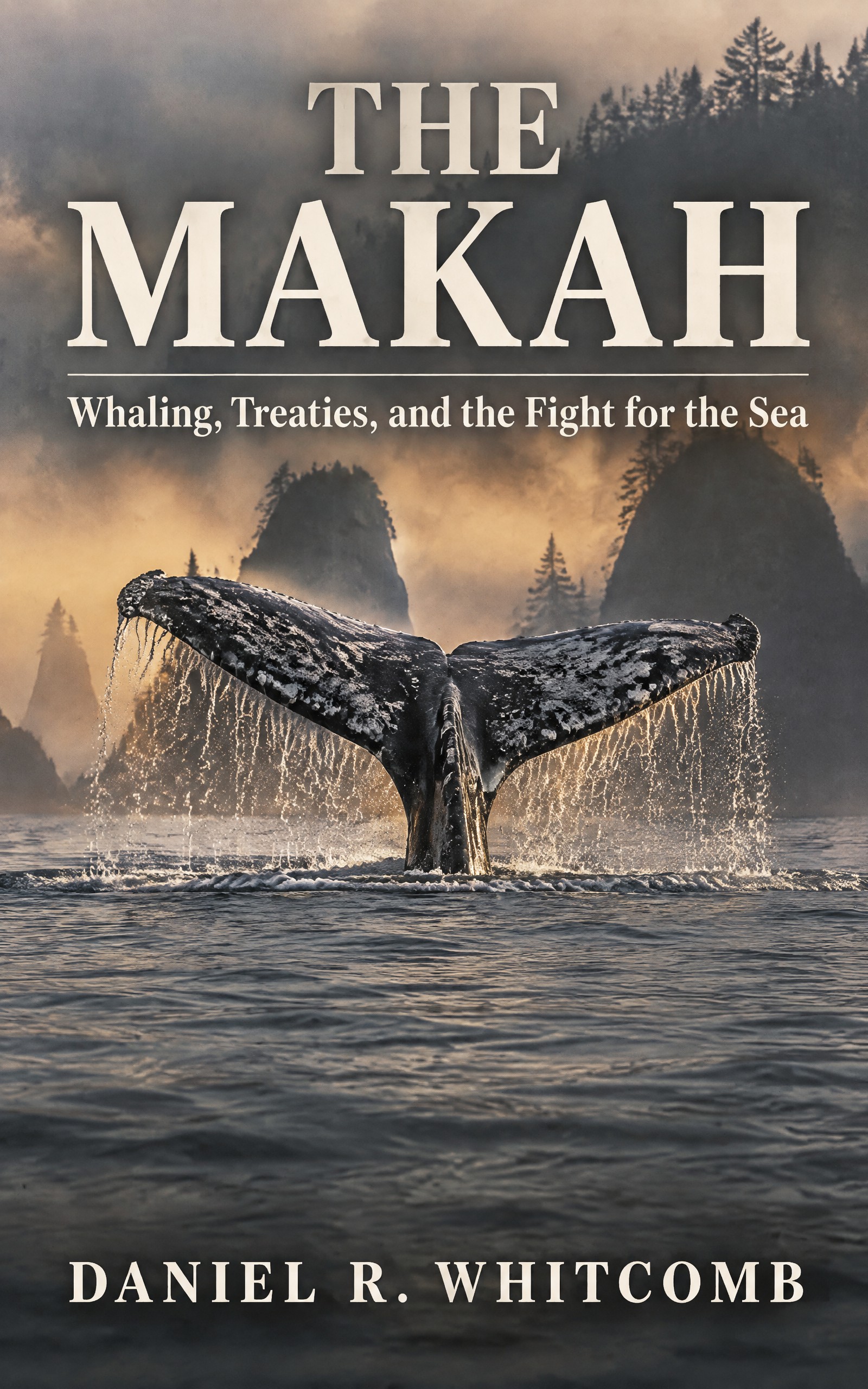
The Makah: Whaling, Treaties, and the Fight for the Sea
by Daniel R. Whitcomb
Before a harpooner stood in the bow of a Makah whaling canoe, he spent years getting ready. He fasted. He bathed in cold water at dawn and scrubbed himself with branches until his skin stung. He prayed, and he learned from the elders what a whale is and what a hunter owes it. The canoe itself, cedar planks steamed and stitched with spruce root, existed for one purpose: to carry a crew of eight within arm's reach of a gray whale passing the northwest tip of the Olympic Peninsula.
In 1855 at Neah Bay, Makah leaders signed a treaty with Governor Isaac Stevens that gave up most of their country but secured, in writing, the right of "whaling or sealing at usual and accustomed grounds," the only United States treaty to name that right. By then commercial whalers were hunting the gray whale toward extinction, and by the late 1920s Makah canoes had stopped going out after whales. They stayed on the beach for seventy years.
In May 1999, after the gray whale came off the endangered list, a Makah crew paddled out from Neah Bay and took a whale, and the town found itself surrounded by protest boats, cameras and lawyers. From that hunt the chapters move through the courtrooms, the International Whaling Commission and the long wait for federal permission, and back to Neah Bay itself, where the right is argued over as fiercely as it is remembered.
The treaty says whaling. The fight is over who gets to decide what that means.