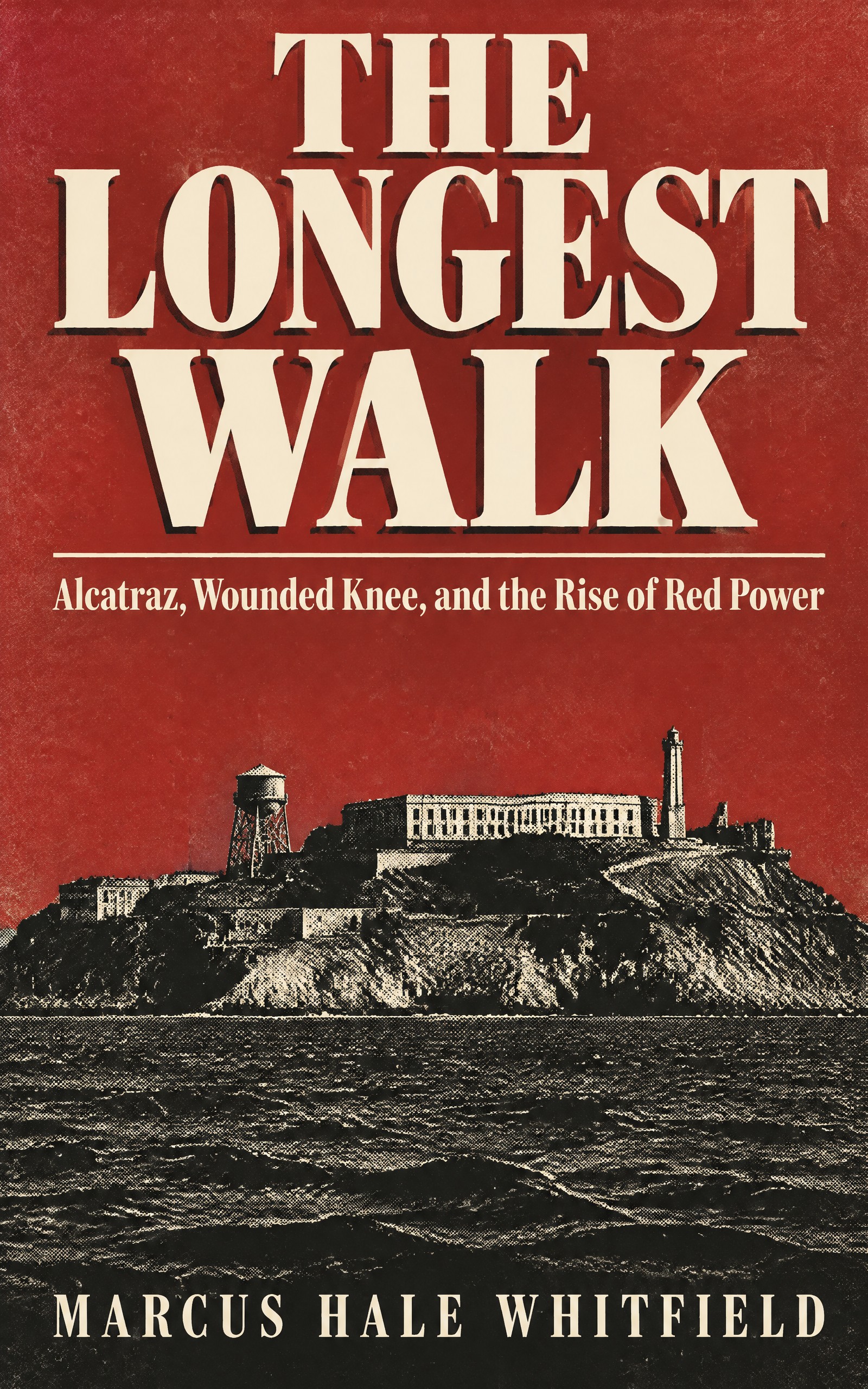
The Longest Walk: Alcatraz, Wounded Knee, and the Rise of Red Power
by Marcus Hale Whitfield
The word Congress chose in 1953 was "freed." A list of Indian nations, from the Menominee of Wisconsin to the Klamath of Oregon, would be "freed from Federal supervision and control," which meant terminated: treaty obligations closed out, tribal rolls shut, reservations broken up, hospitals and schools cut loose. The Menominee, whose sawmill and forest made them one of the few tribes that paid their own way, went to Washington to ask for time and were told the decision had already been made.
A generation that grew up in the wake of that policy, many of them in cities where the government had resettled their families, stopped asking. Some founded the American Indian Movement in Minneapolis in 1968. Others, calling themselves Indians of All Tribes, landed on Alcatraz in November 1969 and held the old prison for nineteen months. The Trail of Broken Treaties ended in the occupation of the Bureau of Indian Affairs in 1972, and in February 1973 the seventy-one-day standoff at Wounded Knee began. The trials followed, and the self-determination laws of the 1970s, and in 1978 the Longest Walk from San Francisco to Washington. Every Thanksgiving, people cross to Alcatraz before dawn for a sunrise ceremony on the island.