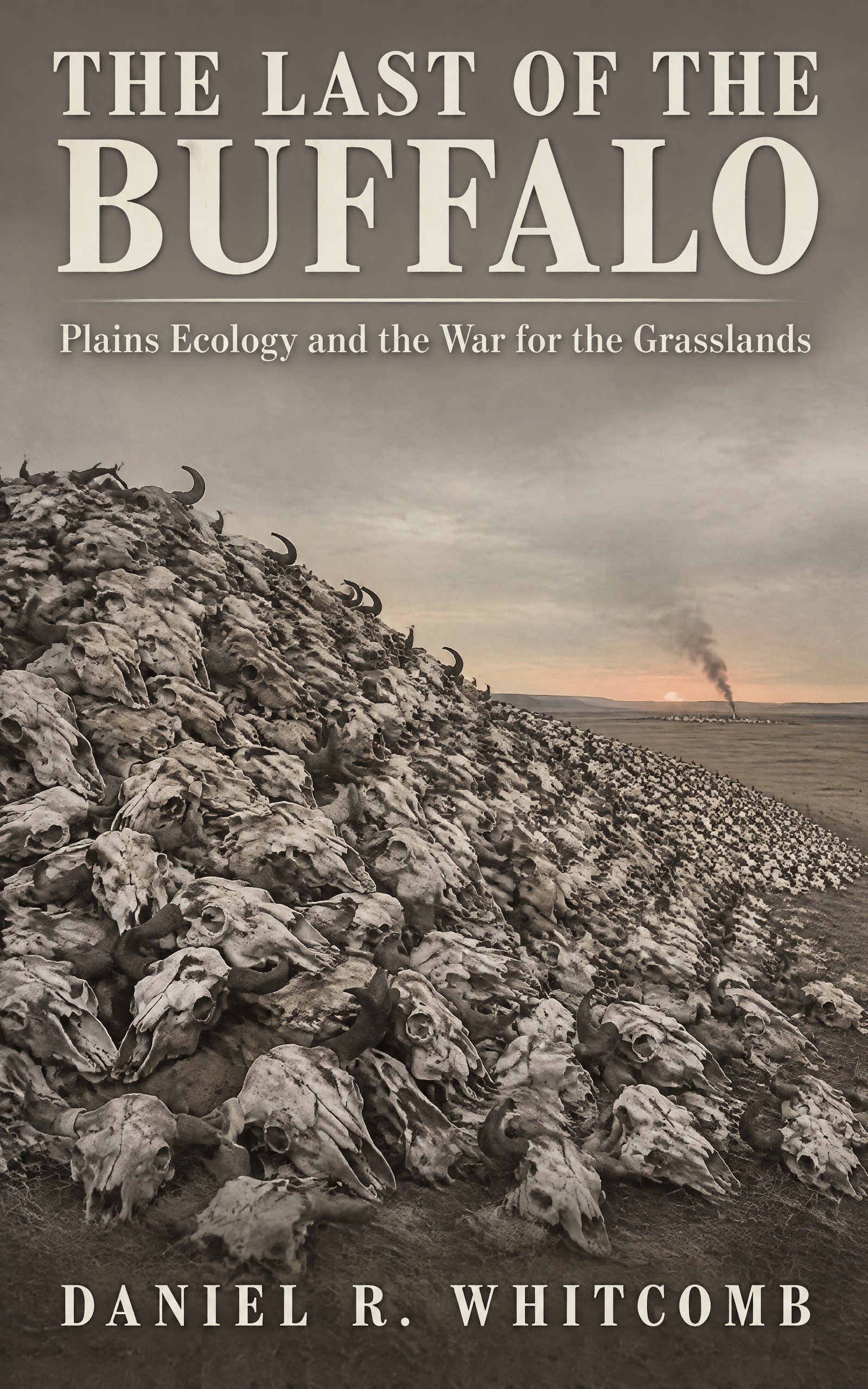
The Last of the Buffalo: Plains Ecology and the War for the Grasslands
by Daniel R. Whitcomb
In a basin in the Texas Panhandle, at the foot of a sandstone ledge thirty feet high, lies a fan of bison bones so old that grass has grown up between the molars of a jaw, died, and grown up again. Someone drove a whole herd over that ledge a very long time ago. In the winter of 1874 the bones were still there, and the hide hunters were on their way.
Everything in that country ran on grass: blue grama and buffalo grass that go dormant through drought and cure on the stem, feeding herds that could take three days to pass a single point and bulls whose wallows held rainwater for weeks. Foot hunters with drive lanes and jumps lived by that system for centuries, and the horse nations after them. The robe traders came next, and the treaty councils at Fort Laramie and Medicine Lodge, and the fighting on the Powder River.
In 1871, eastern tanneries learned to turn bison hides into industrial leather, and within a dozen years the hunters had emptied the plains while the Army, with its own reasons for wanting the herds gone, did nothing to stop them. What came after was cattle in place of bison, a scattered remnant of survivors, and bone pickers who stacked skeletons beside the railroad tracks to be shipped east by the ton. Walk a Kansas or Texas pasture now and the old wallows are the greenest ground in it.