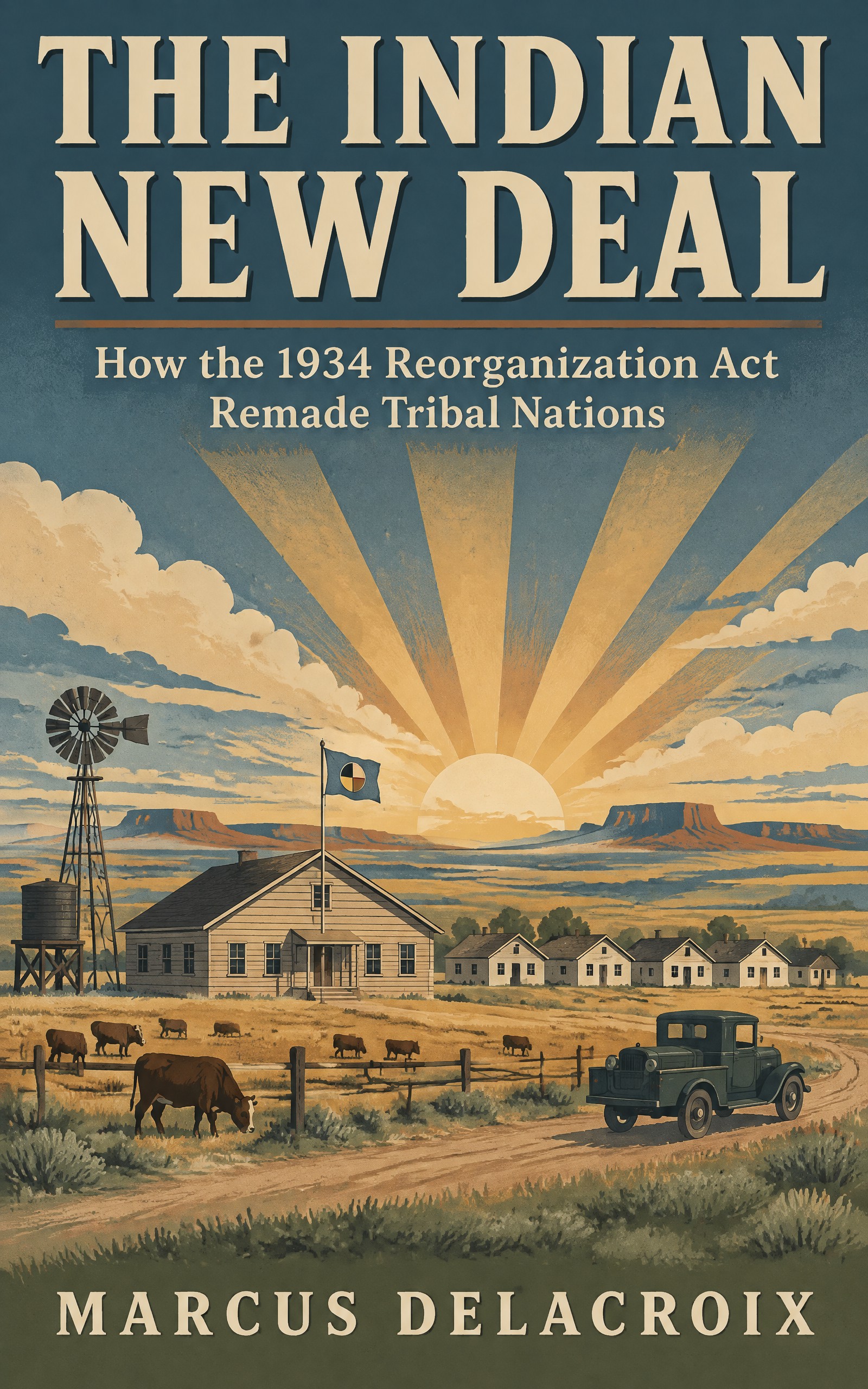
The Indian New Deal: How the 1934 Reorganization Act Remade Tribal Nations
by Marcus Delacroix
"This is not a gift," Robert Yellowtail told the Apsaalooke council in June 1924, setting down the telegram that announced President Coolidge had made every Native person born in the United States a citizen. "This is a rope." If he was a citizen, he asked, why was his land still held in trust by the Secretary of the Interior, and why did a white man at Crow Agency still tell the council what it could do with its own grass?
Ten years later, Washington tried to loosen the rope. The Meriam Report of 1928 had laid bare the poverty, sickness and land loss that allotment left behind, and John Collier, Franklin Roosevelt's Commissioner of Indian Affairs, drafted a law to end allotment and let nations govern themselves under written constitutions. The Indian Reorganization Act passed in 1934, and the referendums began, nation by nation. Some accepted and rebuilt their governments on the new model. Others refused, and on the Navajo reservation the vote was soured by Washington's own campaign to cull sheep and goats from the eroding range.
The new constitutions, the backlash led by the American Indian Federation, the code talkers and war workers of World War II and the first moves toward termination carry the story forward to the paper that many nations still govern by. In 1934 Collier made Yellowtail superintendent of the Crow Agency, and the man who had called citizenship a rope found himself holding the other end.