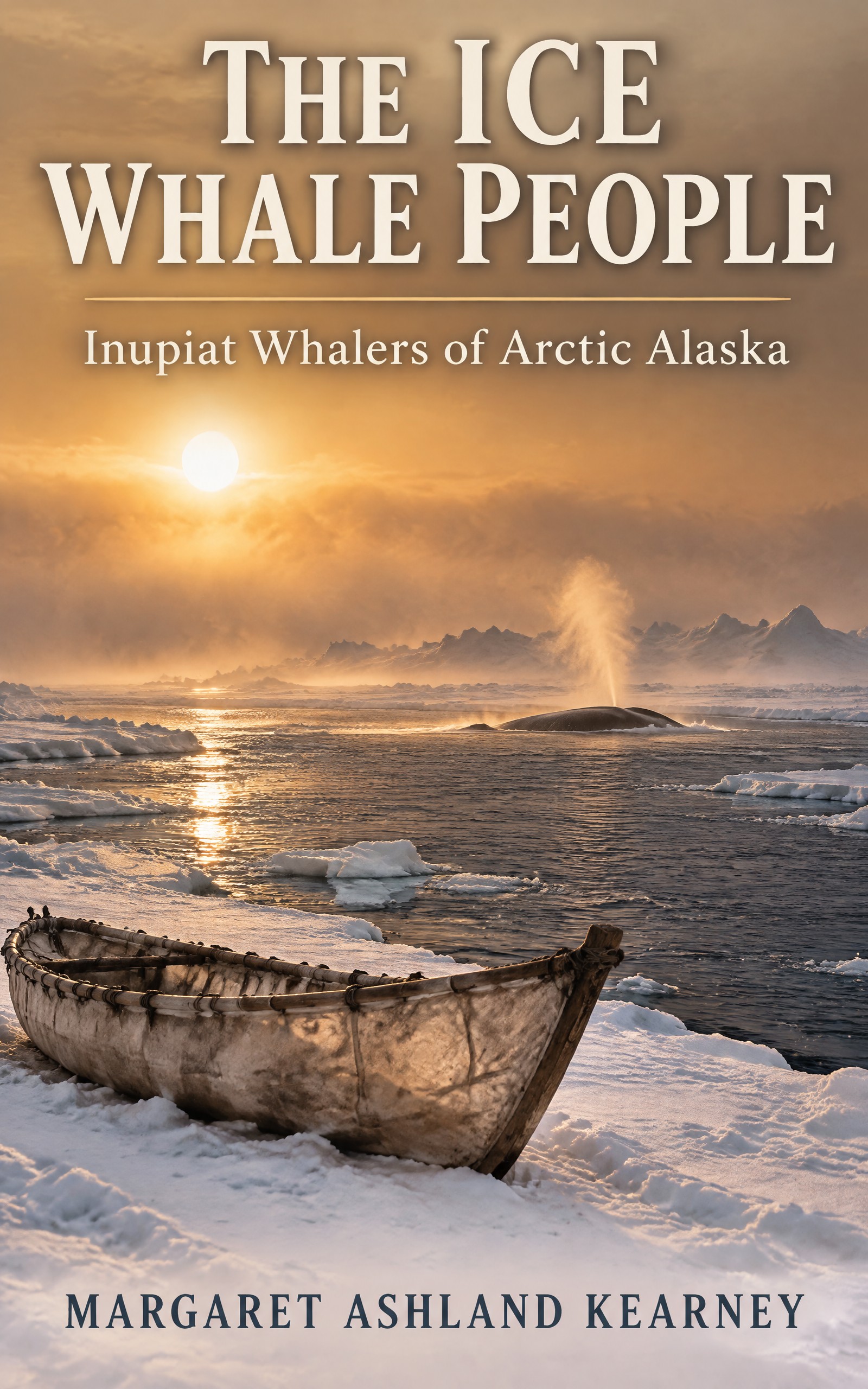
The Ice Whale People: Inupiat Whalers of Arctic Alaska
by Margaret Ashland Kearney
While a Point Hope whaling captain is out on the ice, his wife does not sew, does not comb her hair and does not speak to strangers. She sits still and thinks about the whale, because in Tikigaq the captain's wife is the spiritual center of the hunt.
Three miles offshore in the blue half-dark of April, her husband, who has been testing ice since his father first took him out at nine, kneels beside a seal hole with his mittened hand an inch above the water, feeling for the pressure of a bowhead moving north along the lead. His crew of eight men and two boys waits in silence beside a sealskin umiaq. The dogs have been left in camp, because dogs would talk.
For thousands of years the Inupiat of the Arctic coast lived by the calendar of the ice and the whale's spring migration. Then the Yankee whaling fleets came through Bering Strait, and the book follows what came with them: winter quarters and new trade, a great famine, missionaries and schools, reindeer and rifles, the influenza that ravaged the villages, the land claims, oil on the North Slope, and the long fight under international law for the right to keep hunting the bowhead, which Inupiat crews do to this day. When the lead begins to widen, the captain does not hurry. On the ice, haste is a form of debt.