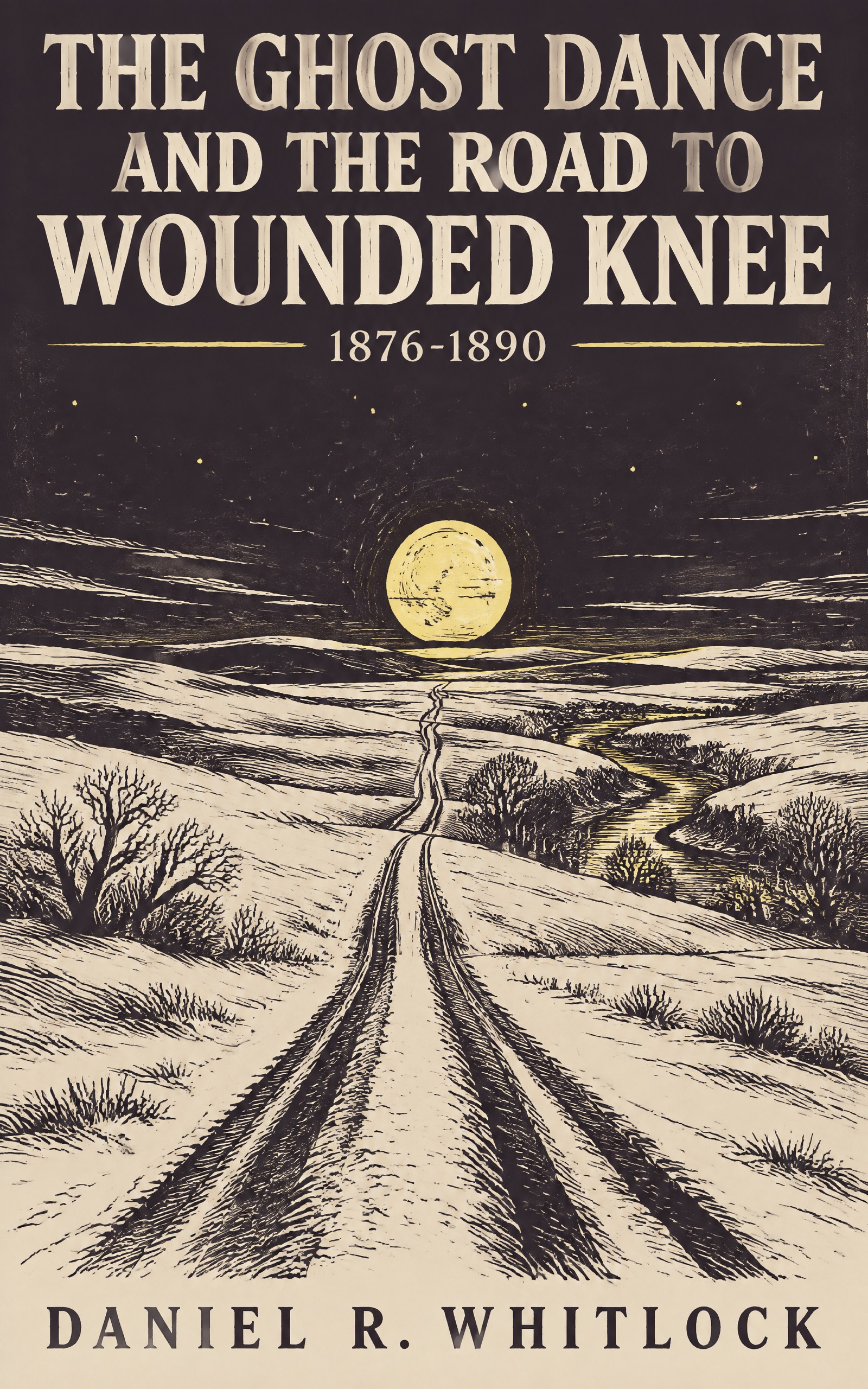
The Ghost Dance and the Road to Wounded Knee: 1876-1890
by Daniel R. Whitlock
On June 26, 1876, the morning after the Greasy Grass, the women were still cutting up the dead horses while the great Lakota and Cheyenne camp broke apart around them, family by family, travois by travois. Custer's five companies lay on the ridge. The victory had been total. It changed nothing about the coming winter, and Sitting Bull knew it: the soldiers would return, and this time they would come for the buffalo, the horses and the meat that made fighting possible.
They did. Nelson Miles and George Crook waged a winter war on the ledger as much as the field, burning grass and taking herds until the hunting ground stood empty. Surrender, exile and the ration lists followed, and the land guaranteed by the treaty of 1868 was taken piece by piece. Years later, in Nevada's Mason Valley, a Paiute holy man named Wovoka had a vision of the world made new, and in a year of hunger his dance reached the Lakota reservations.
Frightened agents called it an uprising. On December 15, 1890, Sitting Bull was shot dead during his arrest at Standing Rock. Two weeks later, at Wounded Knee Creek, the Seventh Cavalry opened fire on Big Foot's band as it was being disarmed and killed as many as three hundred men, women and children. The book stays for what came after: the burial, the newspapers, and the long memory the Lakota have kept since.
The people who danced were praying for the dead to return and the buffalo with them. The men who sent the soldiers could not tell a prayer from a rebellion.