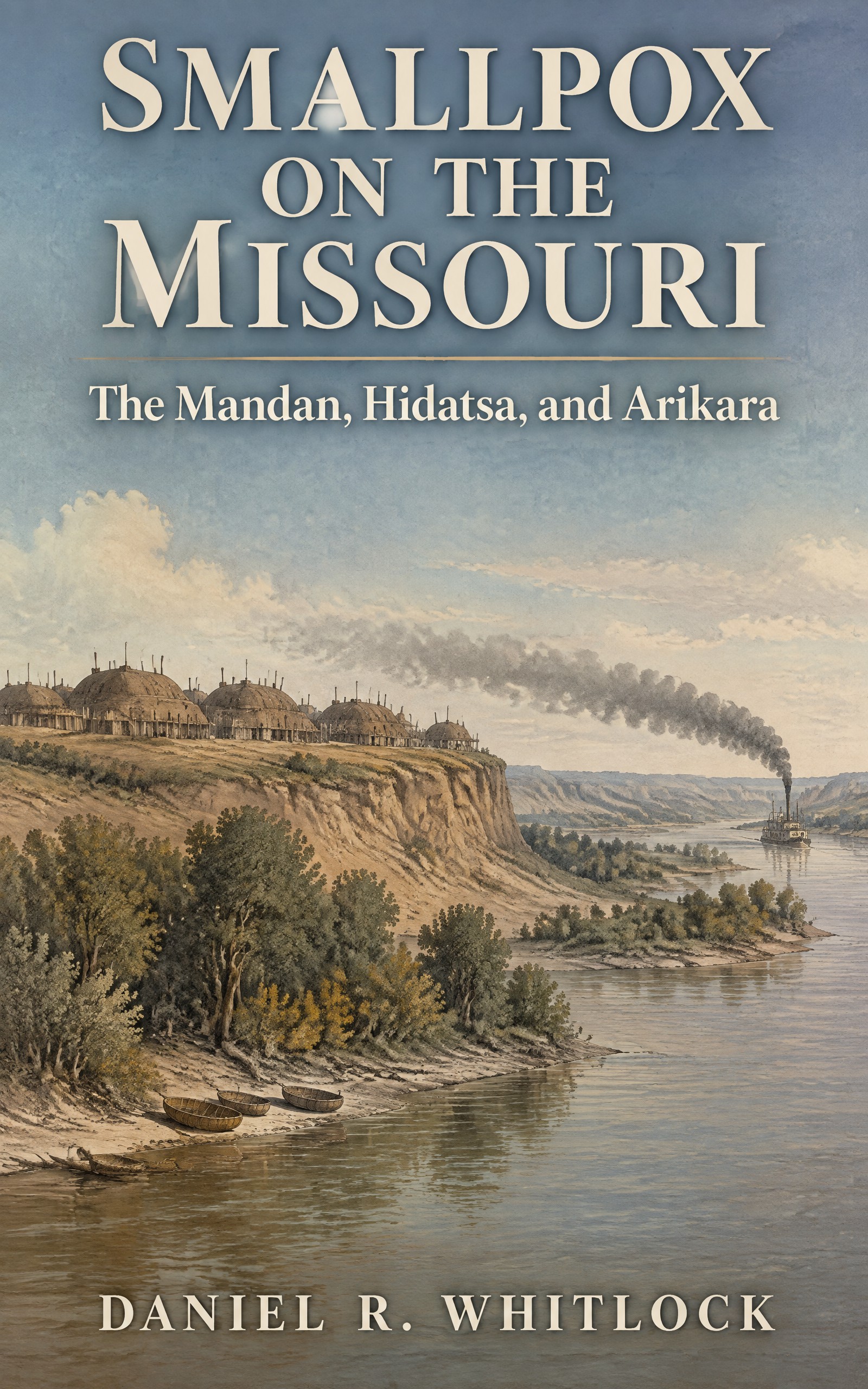
Smallpox on the Missouri: The Mandan, Hidatsa, and Arikara
by Daniel R. Whitlock
Seen from the ridge, a Mandan town on the upper Missouri hardly looked like a town. Forty or fifty earth lodges, each roofed with a foot of packed soil, lay along the terrace like a herd of great animals resting in the wind, and below them women with hoes made from bison shoulder blades tended corn, beans, squash and sunflowers. For centuries the towns of the Mandan, Hidatsa and Arikara had been a crossroads of the continent, where Crow horses, Assiniboine guns and St. Louis trade goods changed hands on the villagers' terms.
In June 1837 a fur-company steamboat, the St. Peter's, tied up at Fort Clark beside the Mandan town of Mih-tutta-hang-kusch. It carried smallpox. Before the fever burned out, the Mandan had lost perhaps nine of every ten people, among them their leader Mato-Tope, Four Bears, and the Hidatsa and Arikara had lost heavily too. The survivors' road ran through the Winter of the Dead to a shared town at Like-a-Fishhook, through the treaty years and the loss of the herds, and into the twentieth century as a single nation.
The fever came up the river that had made them rich. More than a century later the same river rose behind the Garrison Dam and drowned the bottomlands where most of their families lived. Both times, the three nations rebuilt on its banks.