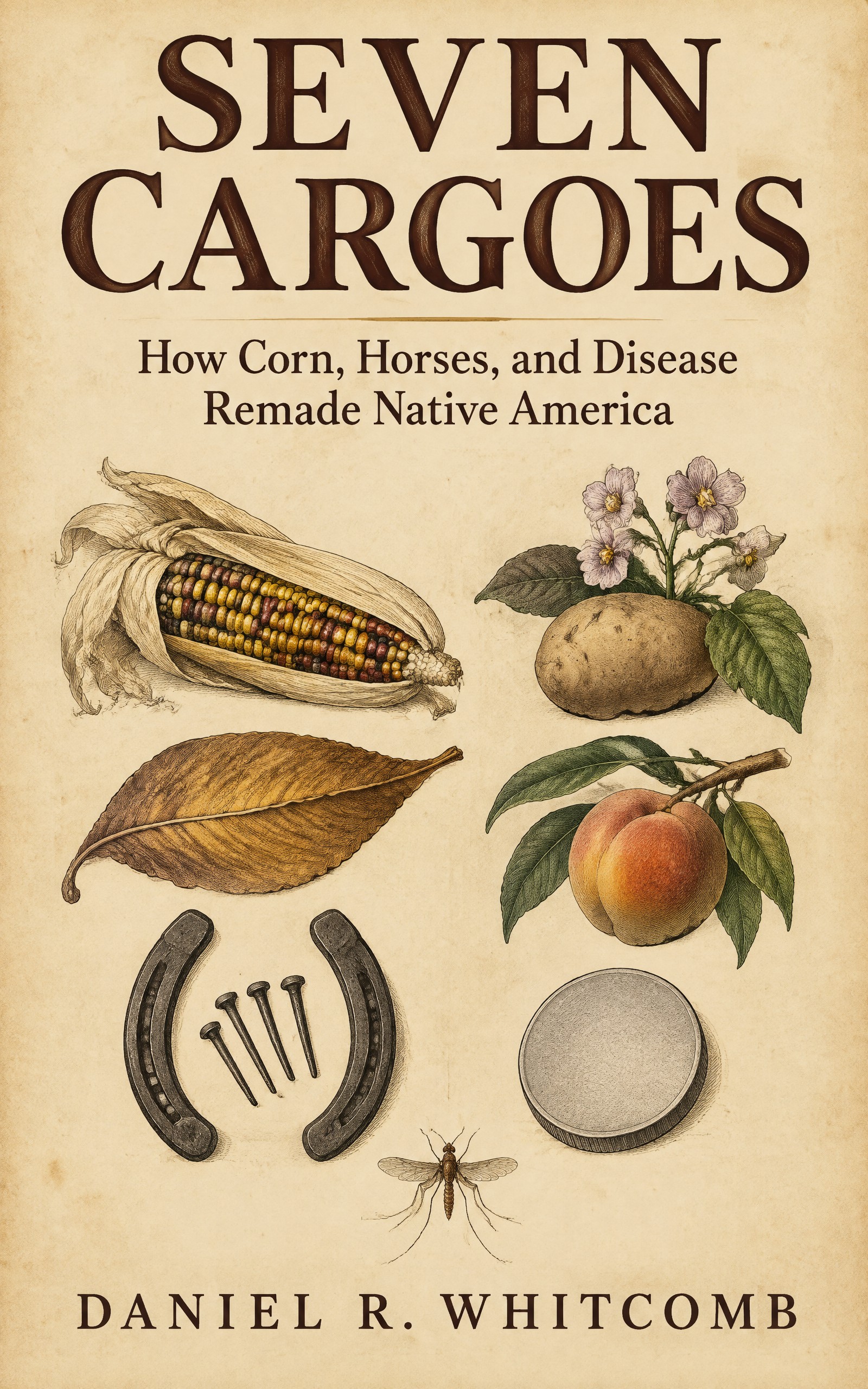
Seven Cargoes: How Corn, Horses, and Disease Remade Native America
by Daniel R. Whitcomb
The horses came ashore swimming. Late in 1493, the men of Columbus's second fleet, seventeen ships and some twelve hundred men, drove them down timber ramps into the surf off Hispaniola and let them flounder to the beach, while Taino villagers who had no word for an animal that could carry a man looked on in silence. Behind the horses came cattle, pigs that would eat anything, wheat seed, sugarcane and grapevine cuttings: the first Old World farm bound for a new world's soil.
What followed ran in both directions, and the book takes it one cargo at a time. Epidemics ran ahead of the Europeans themselves. Maize and the potato went east to feed the Old World. Horses returned to the continent where their ancestors first evolved, and Native nations built new ways of life around them. Mosquitoes brought fevers no one in the Americas had known, tobacco and silver built the first global economy, and the beaver trade drew whole nations into European wars.
From there the story runs through the redcoats and the traders, the young republic's push west, removal and the roads that followed it, and the railroads that finished the buffalo herds, to a reckoning with what no ledger shows. In Seville, clerks at the House of Trade wrote down every mare and every vine cutting bound for the Indies. Nobody wrote down what the sailors carried in their lungs.