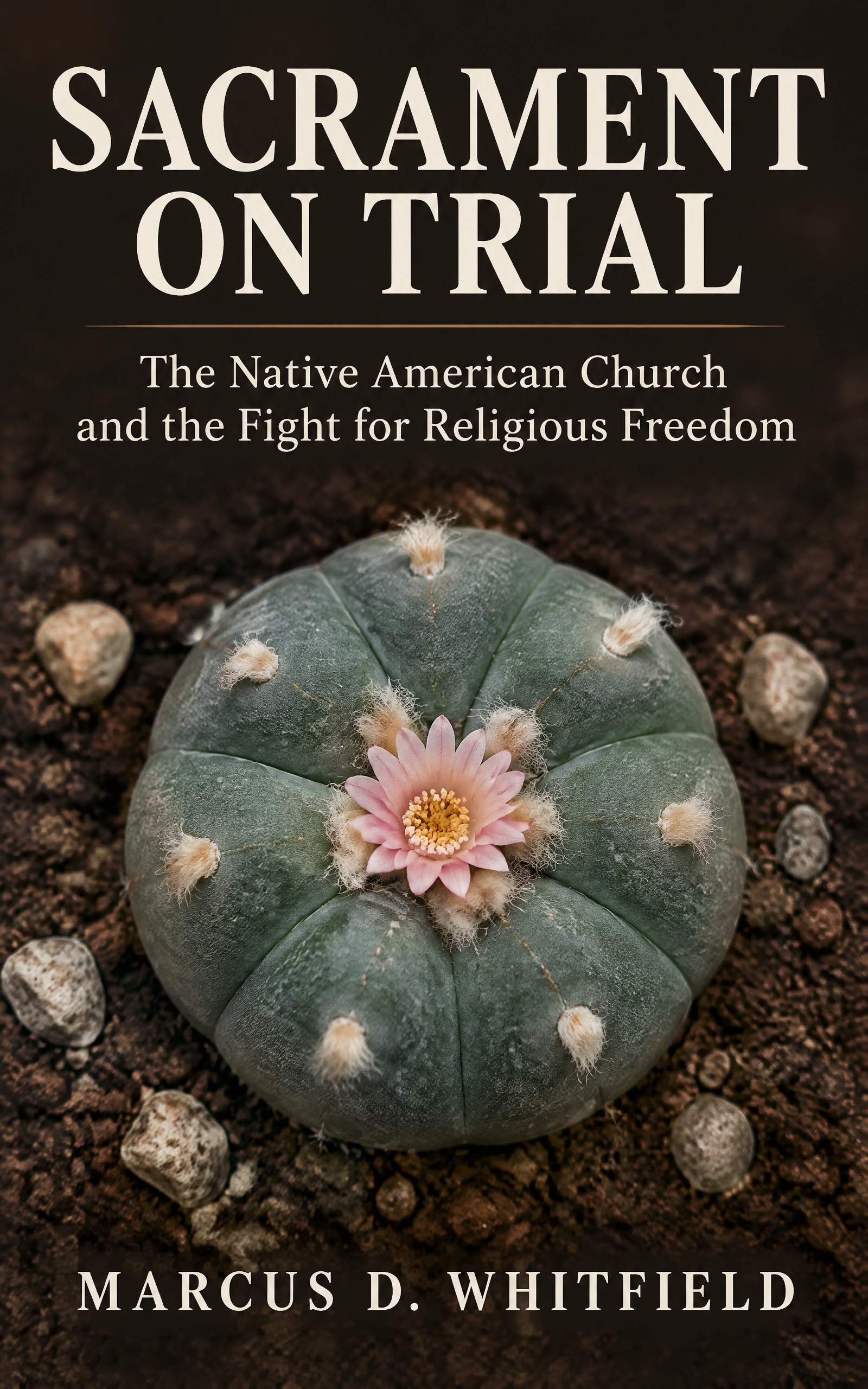
Sacrament on Trial: The Native American Church and the Fight for Religious Freedom
by Marcus D. Whitfield
Alfred Smith, a Klamath man working as a drug counselor in Oregon, lost his job in 1984 for taking peyote at a Native American Church ceremony, and the state refused him unemployment pay on the ground that he had been fired for misconduct. In 1990 the United States Supreme Court ruled that Oregon was within its rights. A sacrament older than any border on the continent had been treated, in law, as a drug offense.
The road to that ruling began in the deserts of northern Mexico, where Wixarika pilgrims still walk hundreds of miles to Wirikuta to gather the cactus they call Hikuri, and where Spanish friars condemned its use in the sixteenth century. From there peyote traveled north across the Rio Grande to the reservations of Indian Territory in the hard years after the buffalo, where the Comanche leader Quanah Parker and Kiowa singers helped shape the all-night ceremony that passed from nation to nation and on to the northern plains.
Missionaries and Indian agents fought it at every step. To protect their worship, peyotists incorporated the Native American Church in Oklahoma in 1918, and for decades afterward its members faced state bans, arrests and trials. After the Smith decision, Congress amended the American Indian Religious Freedom Act in 1994 to protect the ceremonial use of peyote by Native people. It had taken nearly eighty years of lawsuits and legislation, and in all that time the meetings never stopped.