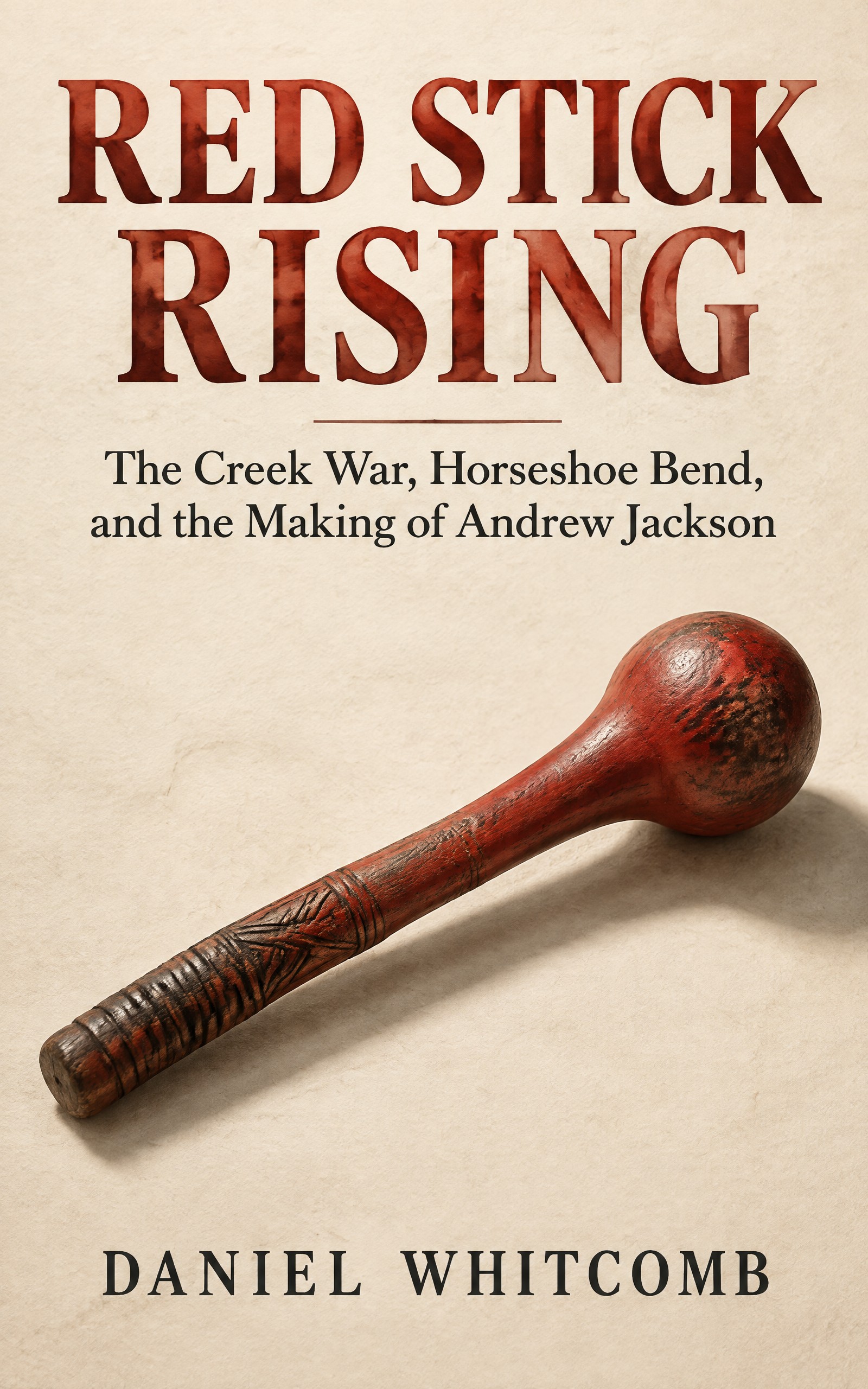
Red Stick Rising: The Creek War, Horseshoe Bend, and the Making of Andrew Jackson
by Daniel Whitcomb
In 1811 a great comet hung for months over the Creek towns on the Tallapoosa and the Coosa, and even the oldest watchers of the sky had no story that fit it. That autumn Tecumseh came south in person with his brother the Prophet's message: the Master of Life would sweep the whites from the land if the people would sell no more of it, put down the white man's cup, and take up the red stick, blackened at one end for the wrongs done to them and banded with red for the war that would set them right.
Many Creeks listened. By the summer of 1813 the nation was at war with itself, Red Stick towns against the chiefs who stood with the United States, and on August 30 Red Stick warriors overran Fort Mims, north of Mobile, killing more than two hundred of the people sheltering inside. Tennessee, Georgia and the Mississippi Territory sent armies into the Creek country, and Andrew Jackson's militia fought its way south until March 1814, when his troops and their Cherokee and Creek allies stormed the log breastwork at Horseshoe Bend on the Tallapoosa. Some eight hundred Red Stick warriors died there.
William Weatherford, the Red Stick leader known as Red Eagle, walked into Jackson's camp alone to surrender. The peace that followed was Jackson's. At Fort Jackson that August he made the whole Creek Nation, including the chiefs who had fought beside him, give up some twenty-three million acres. From there the book follows him to New Orleans and a national name, and comes back at the end to the ceded ground.