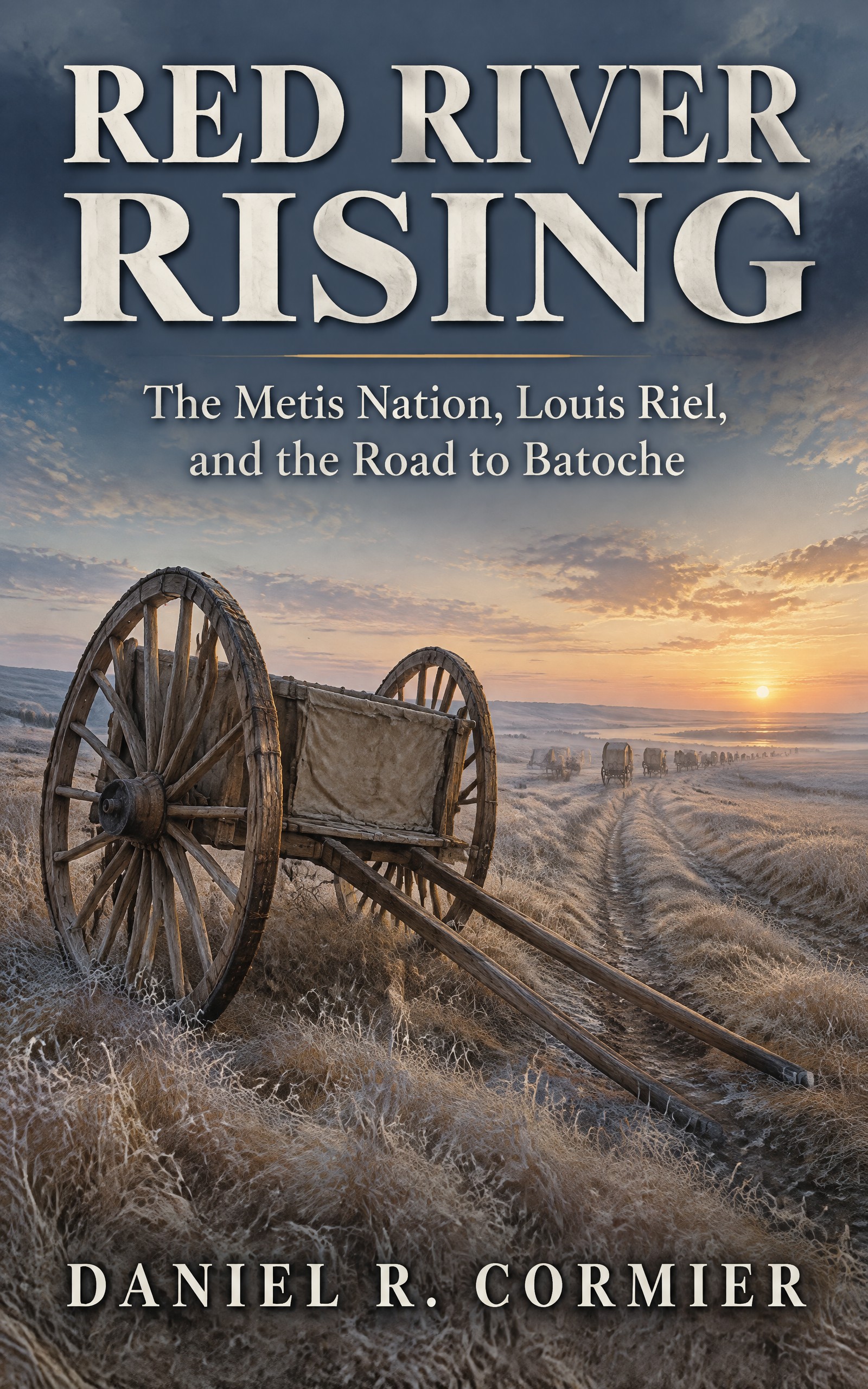
Red River Rising: The Metis Nation, Louis Riel, and the Road to Batoche
by Daniel R. Cormier
The fur trade of the Northwest ran on pemmican: bison meat dried until it was like leather, pounded, mixed with hot fat and sewn into bags of green hide. A ninety-pound bag could feed four canoe men for a week and keep through August heat or forty below, and the women of the prairies made every one. At the forks of the Red and the Assiniboine, out of Cree, Ojibwe, French and Scottish families, that trade raised a new nation: the Métis.
They ran the great summer hunts onto the southern plains and hauled the meat home in two-wheeled Red River carts. When Lord Selkirk's colony tried to stop the pemmican trade, Métis horsemen under Cuthbert Grant met its governor at Seven Oaks in 1816, and he and twenty of his men died there. Half a century later Canada bought out the Hudson's Bay Company's claim to the Northwest and sent surveyors onto the Métis river lots without asking the families who farmed them.
In October 1869 a young Métis named Louis Riel, back from his schooling in Montreal, stood on a surveyor's chain with his neighbors and told the crew to stop. That winter the Métis formed a provisional government whose delegates negotiated Manitoba's entry into Confederation. Then the execution of Thomas Scott sent Riel into exile, and the land promised to Métis families dissolved into scrip. In 1884 the Métis who had moved west to the South Saskatchewan rode to Montana to bring him back.
The road ended at Batoche, where in May 1885 Métis riflemen dug pits along the riverbank and waited for General Middleton's army.