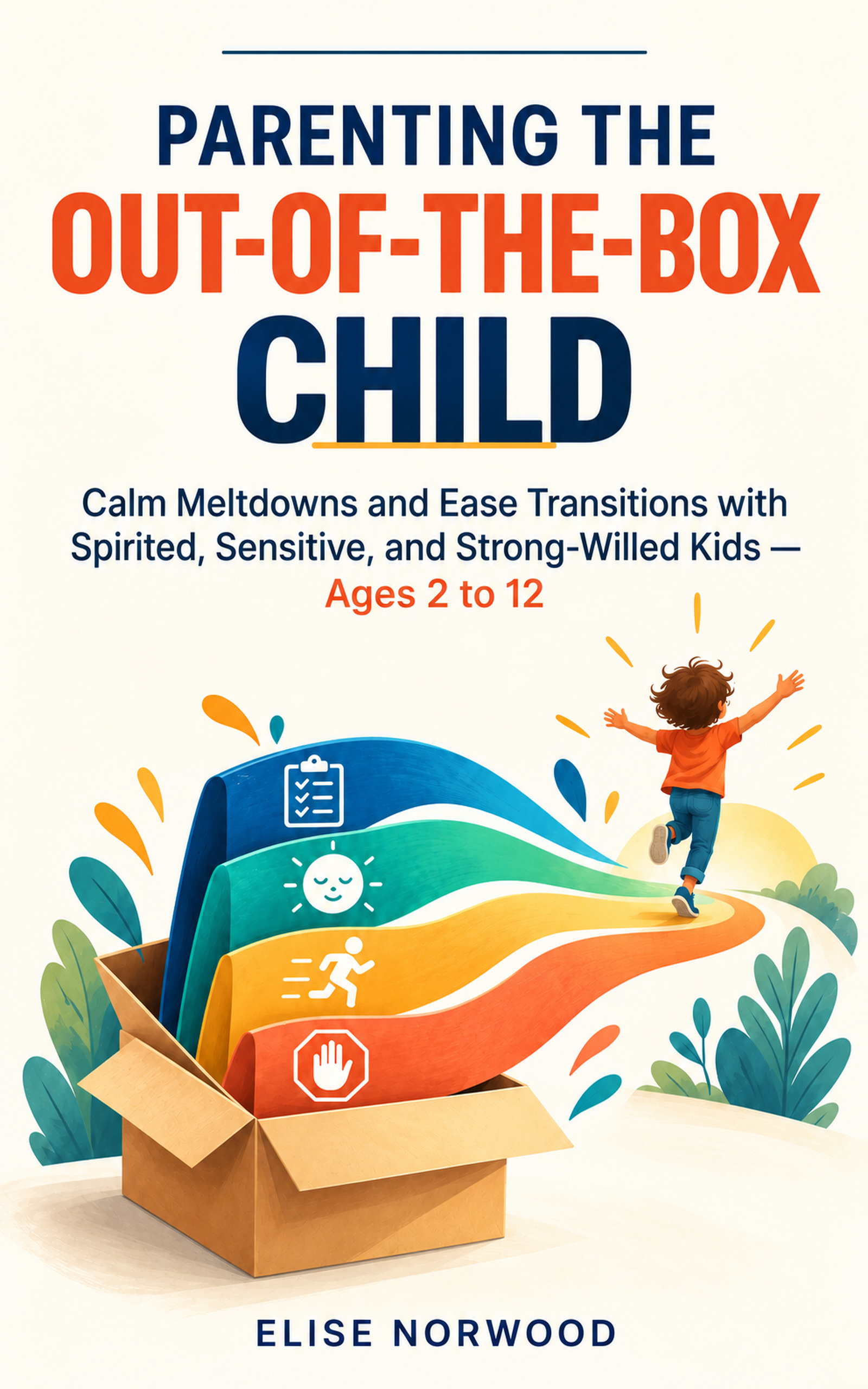
Parenting the Out-of-the-Box Child
Calm Meltdowns and Ease Transitions with Spirited, Sensitive, and Strong-Willed Kids — Ages 2 to 12
by Elise Norwood
“Right, shoes on, we’re going to get your sister.”
What happens next is one of two things. Either nothing at all, as though you had not spoken, or an immediate and disproportionate objection — a shout, a thrown thing, a flat no with more force than shoes warrant.
In other houses that instruction works. In yours it does not, and nobody has been able to tell you why. The advice arrives anyway, from people who have not met your child, and it is always some version of be firmer or be gentler. You have tried both, at length.
Here is the reframe the book rests on. When you say come and put your shoes on, you are not making one request. You are making four, and they arrive at the same moment: stop what you are doing, move your body, change the state you are in, and do the thing itself. Most children pay so little for each of those that all four are invisible. Your child pays full price for at least one — and it is usually the same one.
That is what makes your house different. Not defiance, and not your firmness. A mismatch between what an ordinary instruction costs and what your child has available at that moment.
Find the layer, and the instruction stops failing.
• How to tell which of the four your child is stuck on, using one instruction and one afternoon
• Why the moment at half past four was decided by what happened at eight that morning
• Five ordinary responses that make the stack taller instead of shorter
• What each layer needs, and why the fix for stopping does nothing for moving
• What to do once it has gone all the way over, written to be read beforehand
• In public, at school, across two homes, and when the other adult disagrees with you
• What a long mismatch teaches a child about themselves, and how fast that changes
• The chapter about you, for the day you are the one who has run out
It is also honest about what this genre gets wrong. It does not diagnose your child, it does not hand you a label, and it does not promise the intensity goes away. What changes is what the intensity costs.
Not an easier child. An instruction that fits.