Mescalero Apache: Sierra Blanca and the Reservation Wars
by Daniel R. Whitlock
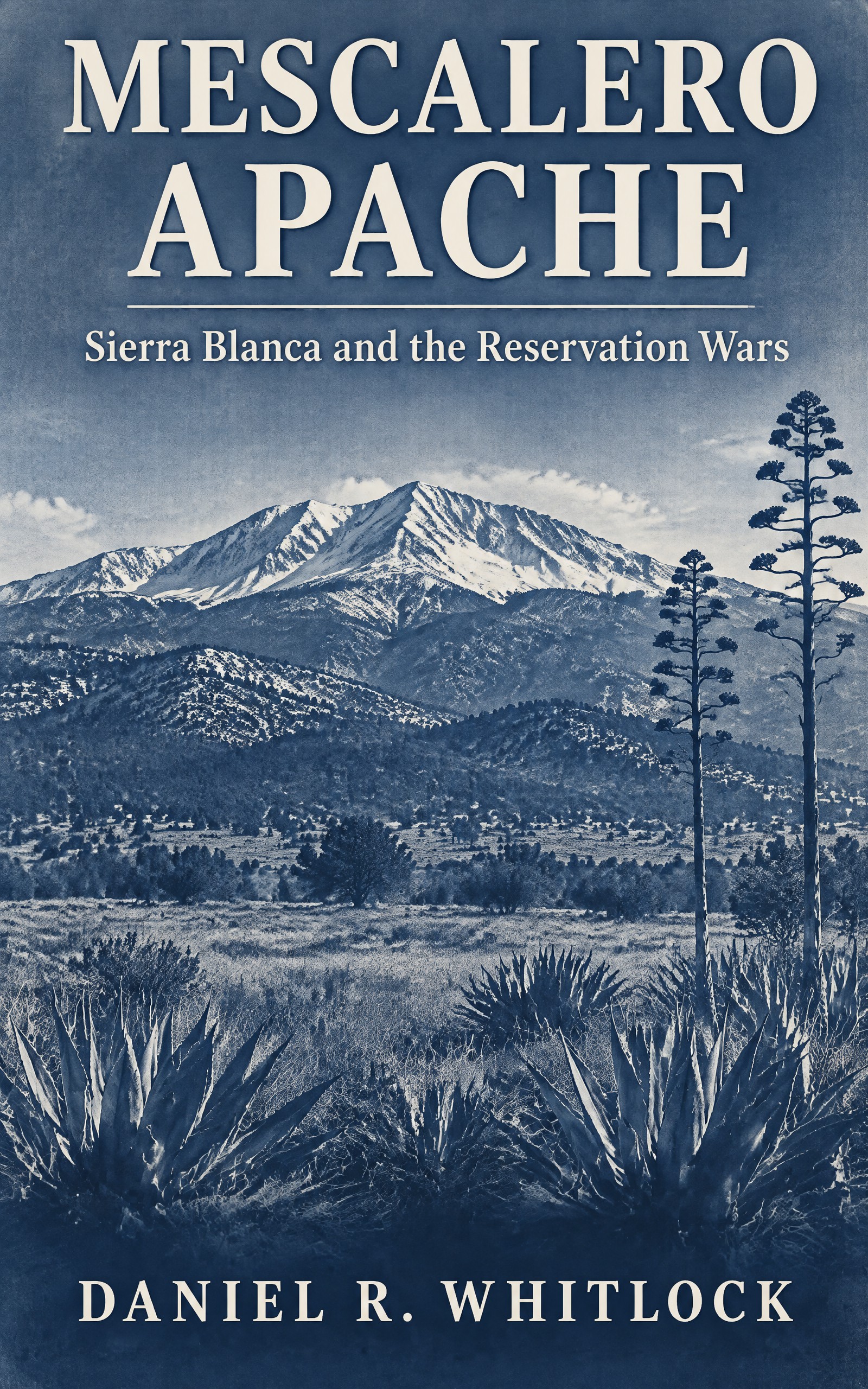
Sierra Blanca, the White Mountain, rises to nearly twelve thousand feet above southern New Mexico, and for the Mescalero it held everything. In late May the women climbed its eastern face before sunrise to cut the heavy hearts of the mescal, the plant that gave the people their Spanish name, and roasted them in pits while the grandchildren hauled the harvest down in hide sacks. From the mountain the bands moved with the seasons: the high country for piñon nuts and hunting in late summer, the low desert in winter, the Rio Grande pueblos for corn, cotton and news, and for the Natage band, the buffalo plains of the Llano Estacado.
Spanish iron and horses changed that world, and so did two centuries of the trade in captives. After the American conquest, the campaign of 1862-63 drove the Mescalero onto the Bosque Redondo on the Pecos. They walked away from that reservation in 1865. In 1873 the United States finally set aside a reservation in their own mountains, near Fort Stanton, and the fighting on the southern frontier went on around it.
The story runs on into the twentieth century. In 1913 Chiricahua prisoners of war, released after twenty-seven years, came to live at Sierra Blanca. The reservation built an economy on cattle and timber and weathered the push to terminate it after the Second World War. The mountain where women once cut mescal before sunrise now carries ski runs on its upper slopes, and the Mescalero Apache Tribe runs them.