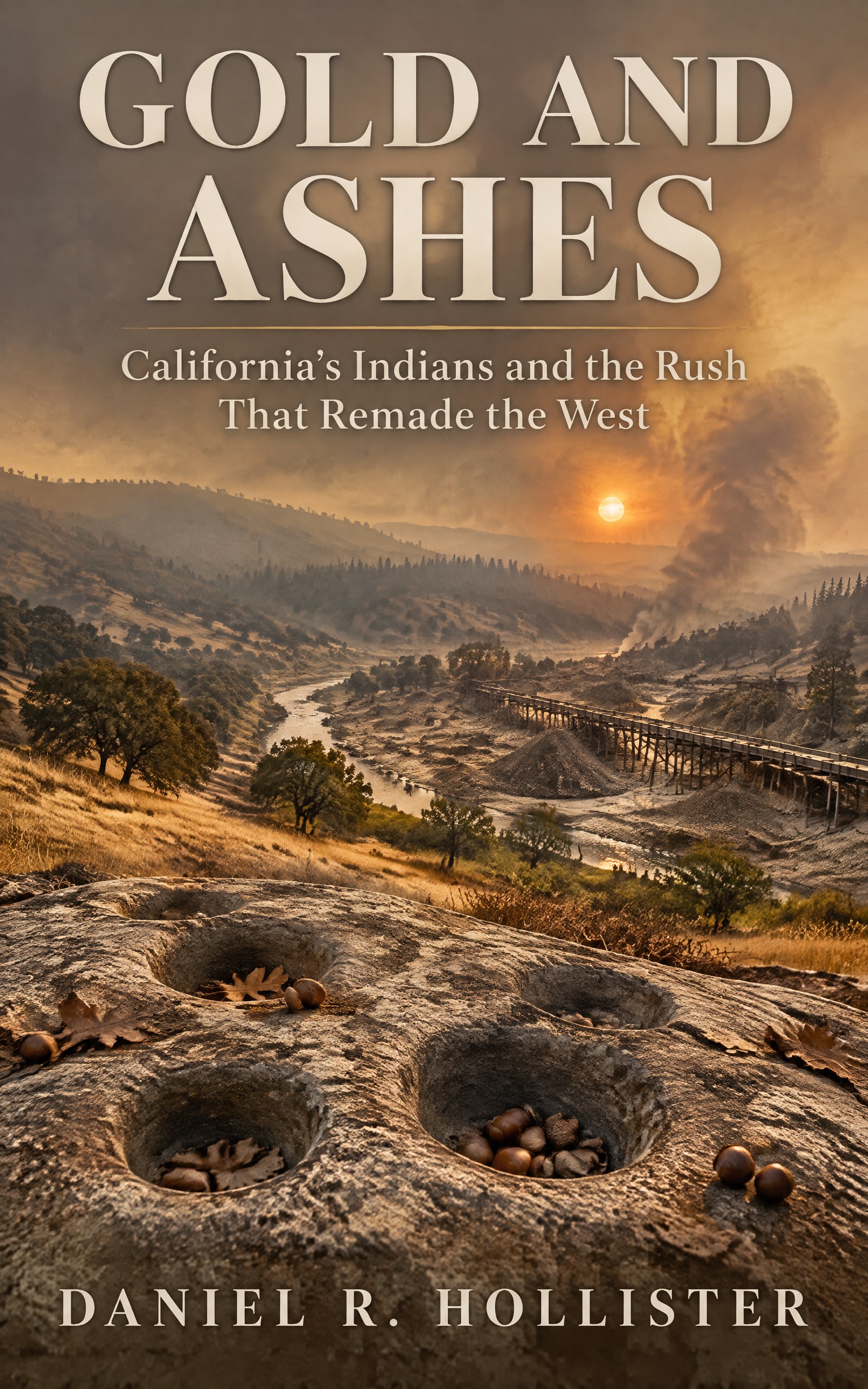
Gold and Ashes: California's Indians and the Rush That Remade the West
by Daniel R. Hollister
In April 1850, months before California became a state, its first legislature passed a law it called the Act for the Government and Protection of Indians. Under it a settler could take custody of a Native child and keep that child's labor until adulthood, an Indian found "loitering" could be arrested and his work auctioned off, and no white man could be convicted on an Indian's testimony.
Two years earlier a carpenter had found gold in the tailrace of a sawmill at Coloma, in a country that had never been empty. Some three hundred thousand people had lived within California's present borders when Europeans first arrived, in more than a hundred nations: Wintu families taking salmon from the Sacramento in willow weirs, Yokuts and Miwok women tending oak groves and grinding acorns in bedrock mortars, Pomo basket makers, Chumash crews in plank canoes on the Santa Barbara Channel.
What the rush did to them came in stages: eighteen treaties negotiated in 1851 and 1852, then rejected by the Senate in secret session and sealed for half a century; volunteer companies paid by the state to campaign against Indian villages; the northern wars along the Klamath; a governor who told the legislature to expect a war of extermination. The people who lived through it held on at the margins, and later carried their fight to Washington.
The bedrock mortars are still there in the Sierra foothills, worn smooth by generations of women's hands. So are the nations.