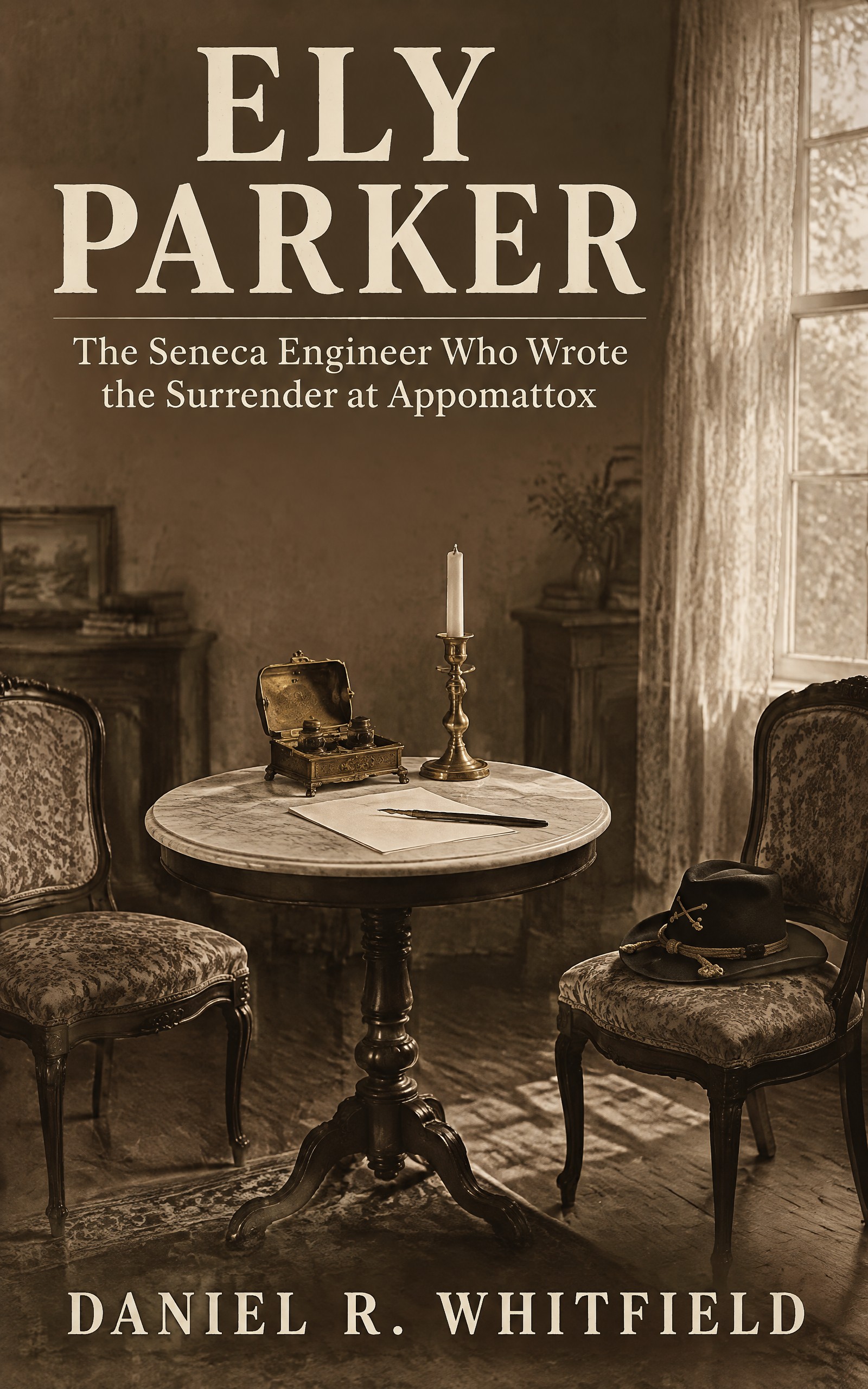
Ely Parker: The Seneca Engineer Who Wrote the Surrender at Appomattox
by Daniel R. Whitfield
As a boy on the Tonawanda Reservation, Ha-sa-no-an-da sat outside the ring of men at the council fire and listened to the old chief John Blacksmith turn the government's word over like a cracked stone: cession, a giving up. A treaty signed at Buffalo Creek was supposed to send the Seneca west, but the Tonawanda band had never put their hands to it. When the talk turned to lawyers and petitions, the boy's father said that a thing taken by a lie could be taken back by the truth, if a man were patient enough and knew the law.
The mission school renamed the boy Ely Parker, and he took his father at his word. He went to Washington with the chiefs to fight the Ogden Land Company, studied law and was refused a license because he was not a citizen, and became a civil engineer instead. The work took him to Galena, Illinois, where he befriended a former Army captain who was clerking in the Grant family's leather store: Ulysses S. Grant.
When the war came, the Union at first turned Parker away. He served anyway, as an engineer and then as Grant's military secretary, and on April 9, 1865, in the McLean parlor at Appomattox Court House, it was Parker who wrote out in ink the terms of Lee's surrender.
Four years later he was in Washington as the first Native American Commissioner of Indian Affairs, until fraud charges pushed him to resign in 1871. Near the end the story returns to Tonawanda, and to the question his father had raised at the fire.