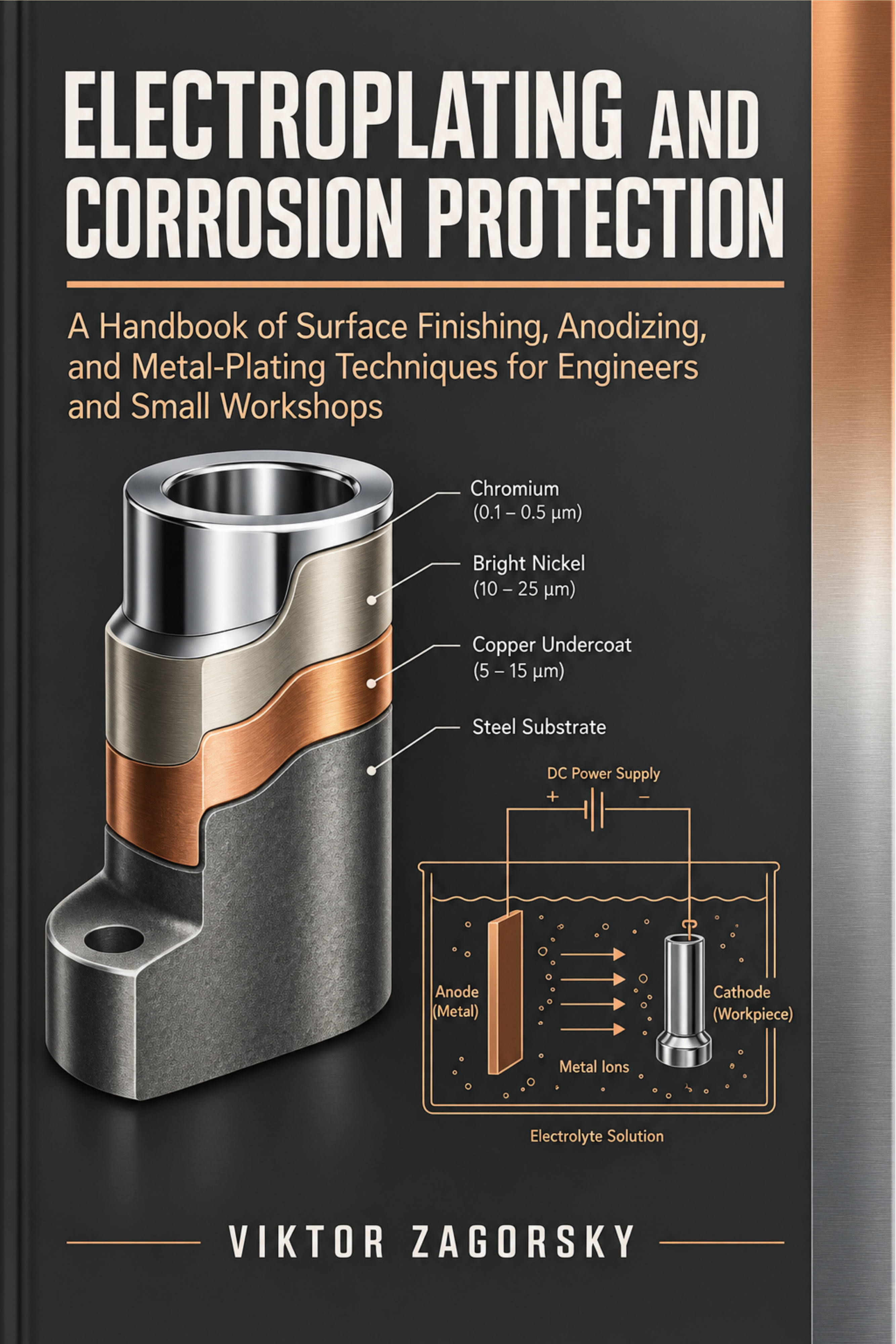
Electroplating and Corrosion Protection
A Handbook of Surface Finishing, Anodizing, and Metal-Plating Techniques for Engineers and Small Workshops
by Viktor Zagorsky
Plating is arithmetic wrapped around chemistry: amp-hours in, micrometres out—provided the surface was clean and the current went where you wanted it.
This handbook teaches both halves of that equation. You will calculate deposit thickness from Faraday's laws, understand why a recess plates thin and how anode placement, thieves, and shields correct it, and prepare surfaces properly so nothing blisters a week later. Nickel, copper, chromium, zinc, tin, precious metals, and electroless nickel each get bath conditions, operating ranges, and their characteristic defects. Anodising and conversion coatings are covered for aluminium and steel. Hull cell work, contamination analysis, and a defect-to-cause troubleshooting chapter follow, closing with corrosion mechanisms, coating selection, and cathodic protection.
Written for engineers, finishers, and small workshops, the book moves from first principles to bench practice without skipping the arithmetic or the chemistry. Whether you are setting up a plating line, diagnosing a blistering deposit, or specifying a coating for a corrosive environment, the chapters give you the calculations, the operating windows, and the diagnostic logic to get repeatable results.
What you will learn:
- Electrochemical principles of deposition and how to calculate deposit thickness from current density and time
- Current distribution and throwing power—why recesses plate thin and how anodes, thieves, and shields fix it
- Setting up a plating area safely, including tank layout, ventilation, and electrical requirements
- Surface preparation and adhesion, from degreasing and pickling to the causes of blistering and peeling
- Bath conditions and operating ranges for nickel, copper, brass, chromium, zinc, tin, silver, gold, and electroless nickel
- Anodising and conversion coatings on aluminium, plus sacrificial coatings for steel
- Bath control and analysis, including Hull cell testing and contamination diagnosis
- Defect-to-cause troubleshooting for pits, roughness, poor adhesion, and uneven deposits
- Corrosion mechanisms, coating selection strategy, and cathodic protection
Who it is for: This book is for engineers, plating technicians, and small workshop operators who need practical, calculation-based guidance on electroplating, anodising, and corrosion protection. It assumes no prior plating experience but does not shy away from the formulas and chemistry required for professional results.