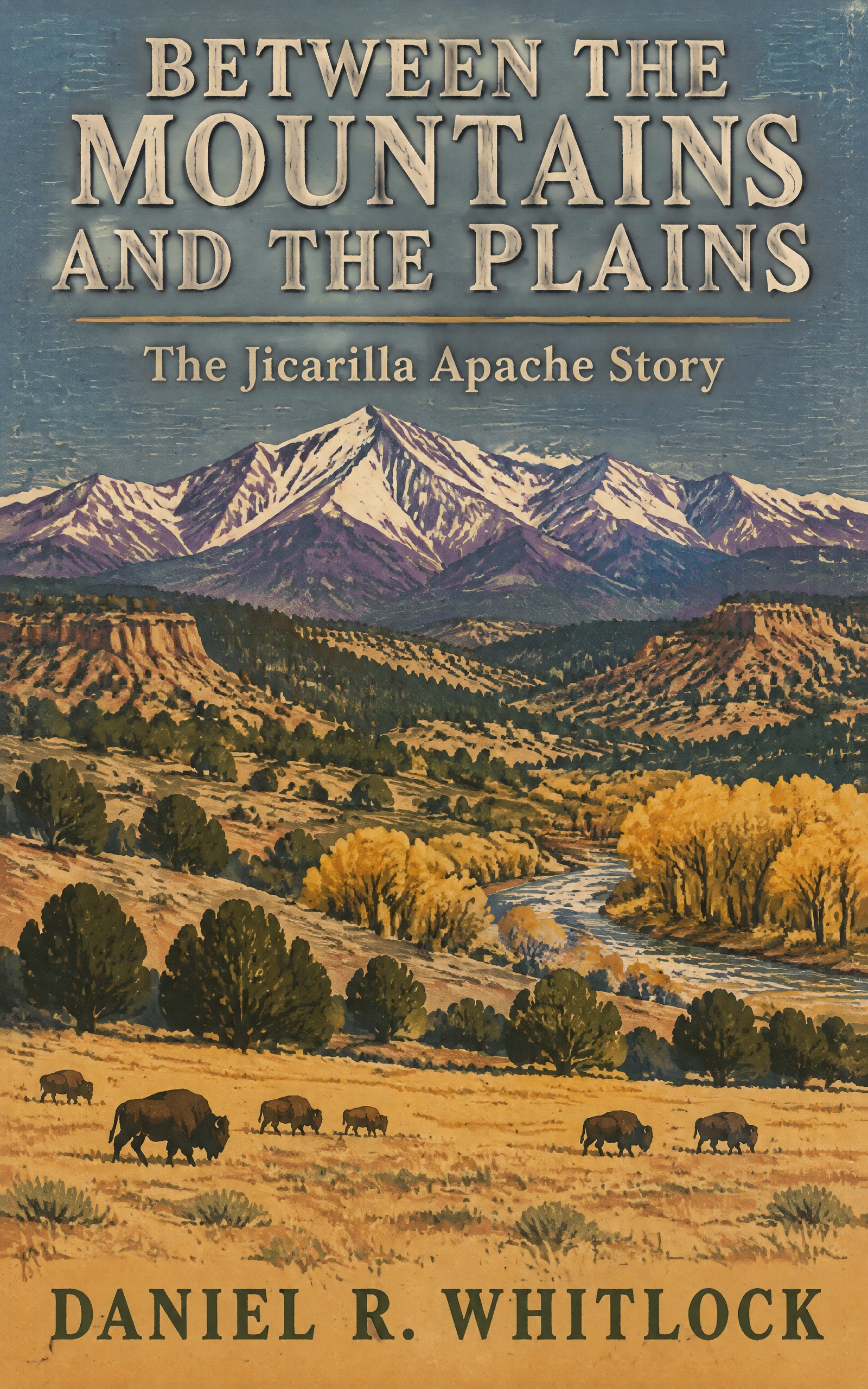
Between the Mountains and the Plains: The Jicarilla Apache Story
by Daniel R. Whitlock
A Jicarilla camp kept two kinds of house. In the valleys below the Sangre de Cristo the people lived in brush wickiups, low domes of willow poles covered with bark, grass and hide. When scouts brought word that the bison were gathering out east, the wickiups were left behind and the tipis came out of their bundles. People who carried both sets of poles knew that the year had two halves, and that their country was a hinge: shelter in the mountains, wealth on the plains running out toward the Llano Estacado.
West through the passes lay the Rio Grande pueblos, kinsmen and trading partners with corn, cotton and turquoise. East lay meat, hides and a country that had to be watched. The Jicarilla held that balance through the Spanish colony and its castas, through the Mexican years and the coming of the American fur traders. Then it broke: a treaty with the United States in the 1850s that was soon undone, lean years at Abiquiu, and a reservation at last in 1887 that did not end the fight for land.
That fight runs on through Dulce and the modern nation into the present day. Even the name tells part of it. Jicarilla probably comes from the Spanish for a small basket or cup, a word laid on the people by officials and traders writing in a language that was not theirs. The Jicarilla Apache Nation signs its leases and laws in it today.