
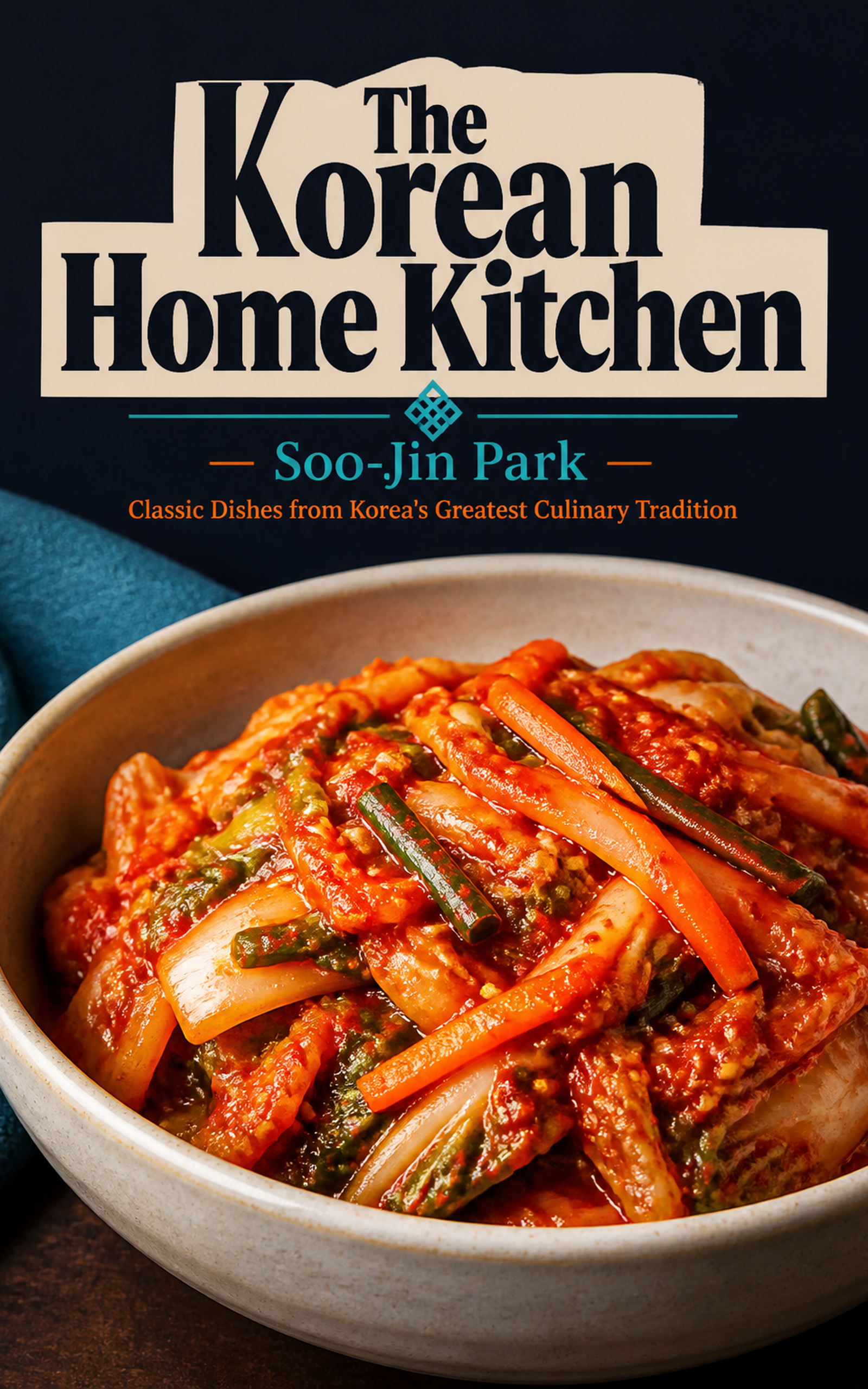
📖 Ebook
The Korean Home Kitchen
Classic Dishes from Korea's Greatest Culinary Tradition
by Soo-Jin Park
Language: EN
$4.99
Sign in is required at checkout. You can add to cart anytime.
About this book
The summer of 2001, a blue Le Creuset pot stained a deeper red each year from the gochujang jjigae bubbling on the stove. But it was the crocks on the balcony that held the real magic.
A dozen kimchi variations. One for each season, she used to say, though summer meant a quick, watery kimchi to be eaten within days.
The process never changes. Salt the cabbage until it bends without breaking. Make the paste. Pack it tight into a jar. Wait.
Do not skip the salting. It is the foundation.
This is a book about the food a Korean household actually eats, written by somebody who learned it standing next to the person making it. It is organised the way a Korean table is organised rather than the way an English-language cookbook usually is.
Banchan, the side dishes at the heart of every meal, come first, because they are what a meal is built from rather than what it is decorated with. Then jjigae and guk — the soups and stews, the gochujang jjigae in that blue pot among them. Then rice, noodles and rice cakes. Then the pancakes, fritters and savoury cakes. Then the grilled and braised dishes: meat, seafood and tofu. And last, kimchi and the other ferments, given a full chapter rather than a sidebar.
Every recipe carries yield, preparation time and cooking time at the top, an ingredient list, a numbered method and a notes section that says what can be substituted and what genuinely cannot.
The notes are where the book earns its keep. They name specific brands where the brand matters and say so when it does not. They tell you where the crunch comes from and which step you are about to rush. They explain that pressing salt flakes between each leaf of a napa cabbage is slow on purpose.
Baechu kimchi makes about a gallon, from one large or two medium cabbages: forty-five minutes of preparation, ten minutes of cooking, two hours of salting and one to two days of fermenting.
For cooks who want Korean home food explained by somebody who still keeps a jar of kkakdugi on the counter and a smaller one of jangajji for when they want something sharp.
Secure checkout. After purchase it’s yours forever — read in your browser on any device.